

Almost Time to Plant Potatoes
Our bi-monthly gardening column offers ideas on how and when and what types of tubers to plant this spring.
By Kat Consler
For The Record
It’s true: When the dandelions are blooming in your neighborhood, it is time to plant potatoes. In New England, dandelions can be used as a reasonable gauge to tell if the soil has dried and warmed enough for potatoes to be comfortable. All potatoes like well-draining soil, but some of the varieties we carry are well-suited for heavier soils.
Choosing the planting site
Potatoes grow best in fertile, well-drained soil that is high in organic matter. Potatoes require full sun. If your soil is very heavy and waterlogged, grow them in raised beds or containers. Well-tilled, rock-free soil will produce the most uniform crop. Work in some well-matured compost before planting, to add organic matter.
Preparing and planting
Potatoes are best planted in May or mid-June, when dandelions are blooming in your location. Cut seed potatoes in half. Don’t cut small potatoes or fingerlings. Let cut potatoes dry overnight or up to three days in a closed paper bag at room temperature. Healing the cuts in this way will prevent the potatoes from rotting in the ground.
Plant potatoes 12 inches apart in a four-inch-deep trench, cover with soil. Space rows two to three feet apart. When foliage has grown a few inches above ground, begin hilling (piling soil on top of the plants). Hill your potatoes at least twice a season. This will increase the space your potatoes have to grow and protect the tubers from sunlight.
Instead of hilling with soil, you may cover the plants with layers of seed-free straw. Keep potato plants well watered throughout the season.
Fertilization
Some compost may be mixed into the soil before planting. Too much nitrogen will result in lots of foliage and few tubers.
Weed Control
Keep your potato plants weed free.
Diseases and Pests
Colorado potato beetles are a common pest to potato plants. Best practice is to remove them by hand and kill them by dropping them in a jar with soapy water. Well-timed use of row cover can be another option.
The chance of getting early or late blight can be lowered by allowing enough space for good air circulation and keeping weeds at bay. Watering in the morning allows foliage to dry throughout the day and reduces the spread of diseases. Only use certified seed to prevent the spread of viral diseases and scab.
Harvest
Potatoes are ready to be harvested after the plants have flowered and the stems turn brown. Don’t allow potatoes to freeze in the ground. Use a fork and dig from the sides of your rows to avoid damaging tubers. Store potatoes in a cool (40-50F), dark place.
Varieties
If you’re working in clay soil, give Dark Red Norland a try. This is an early season potato with high yields and great flavor, firm white flesh and red skin.
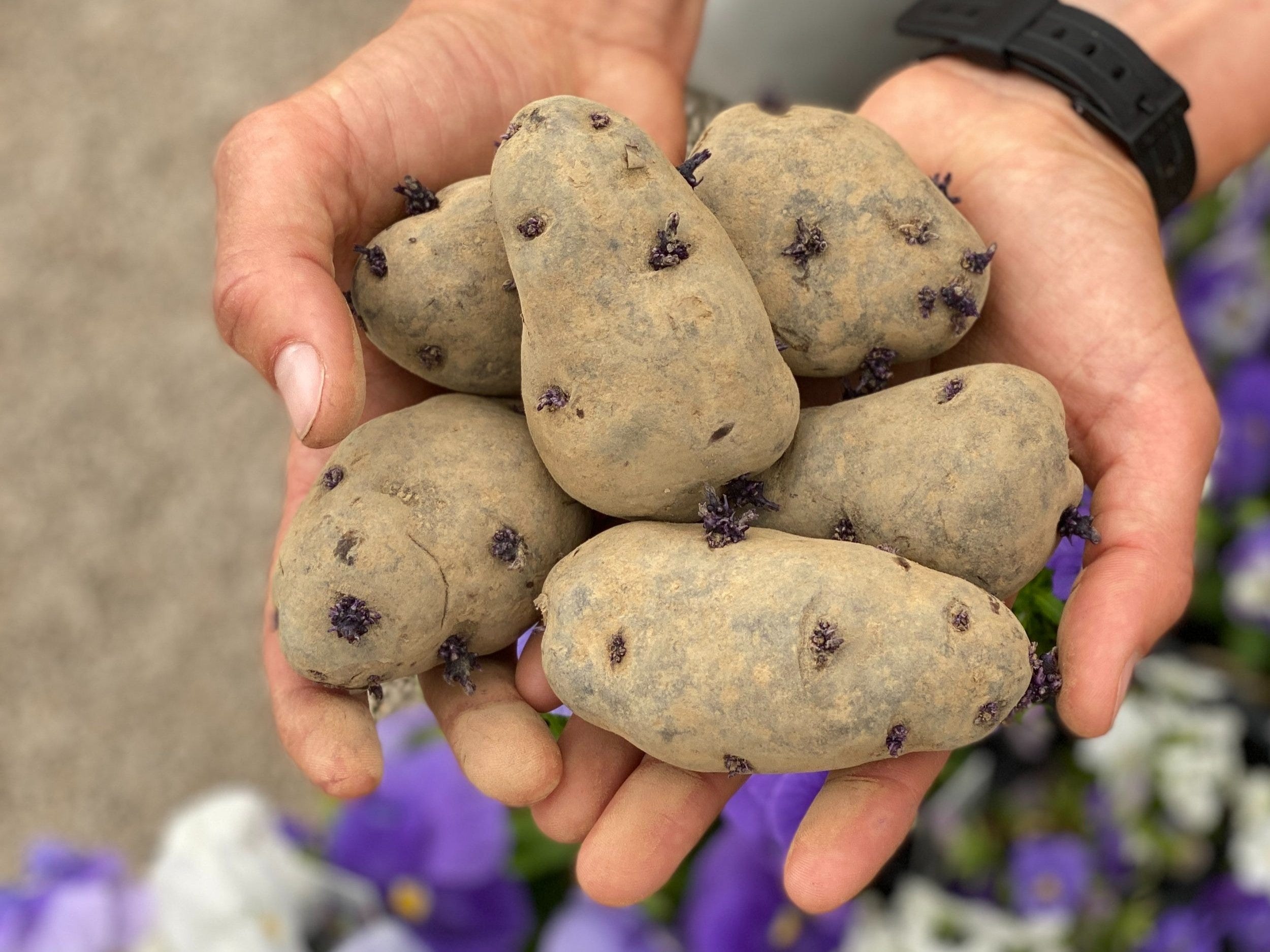
If you’re at the other end of the spectrum – working in sandy drought-prone soil – All Blue is a great performer; blue skin, blue flesh and blue flowers make this one extra special.
If you’re growing in containers or grow bags, varieties with small tubers are your best choice. Banana is a buttery yellow fingerling variety with good storage qualities. Upstate Abundance boasts very early, golf-ball-sized potatoes with white flesh and a creamy texture.
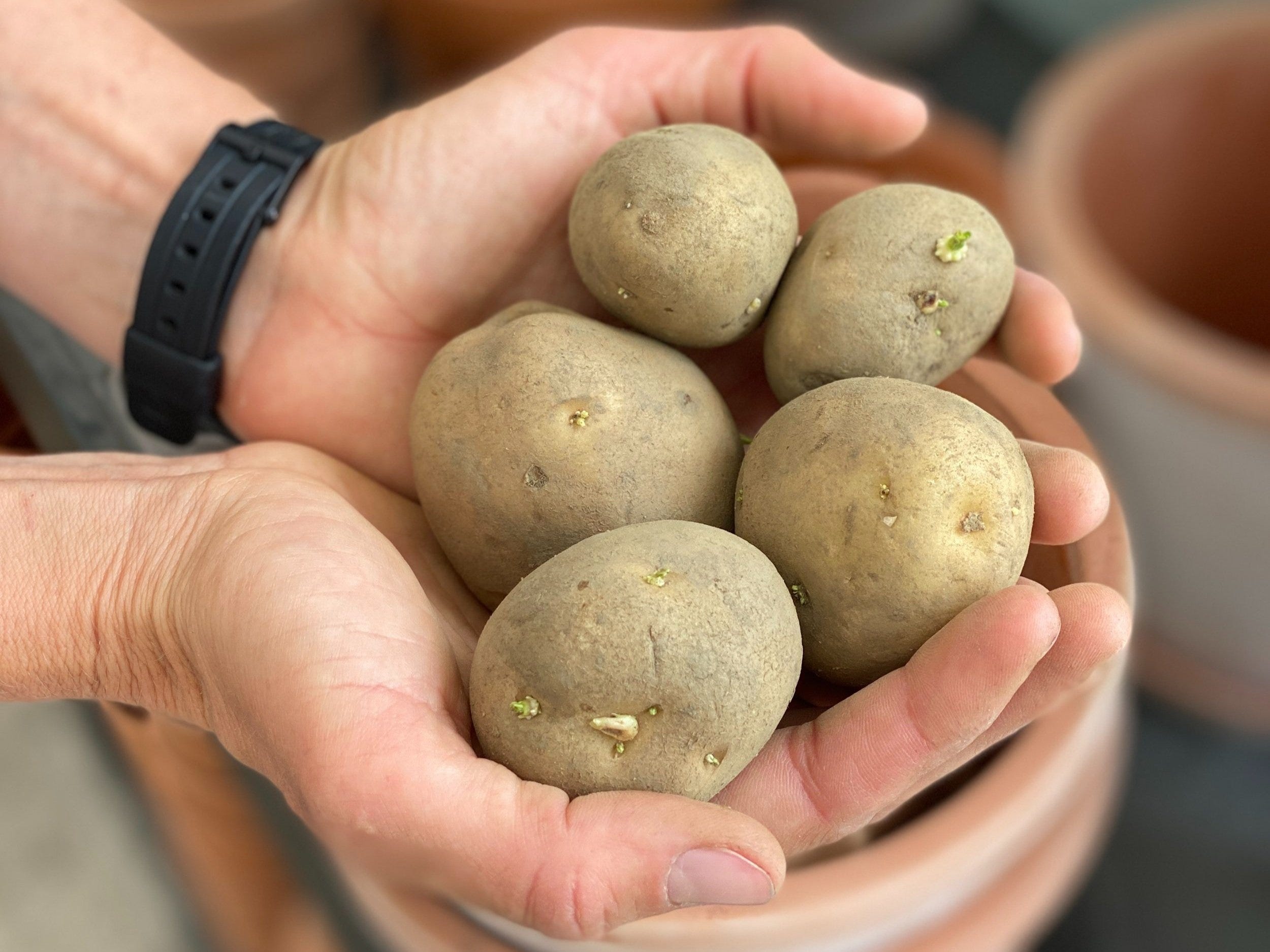
Our overall favorite is called German Butterball. Its delicious flavor and texture lends itself to many culinary uses and never disappoints. If you’re looking for an earlier season variety with similar flavor qualities, Carola is a great choice as well. Both have yellow flesh and skin.
Kat Consler works at Red Wagon Plants in Hinesburg.
🥐 Rolling 🪨🥌 Stones song :: " Dandy lions 🦁🦁 don't tell no lies, Dandelions ‼️👌🤠