

Carpenter-Carse Library joins others in seeking more money from the town
Healthcare, deferred maintenance and the decision to convert rented space into expanding the Community Room are reasons for the 11 percent increase in the library's ask of the town.
By The Record Staff
Katherine Kjelleren, board president of The Carpenter-Carse Library, may have put it best in her opening remarks to the selectboard recently: “We’re busting at the seams.”
Indeed. The library has seen increases in visits, number of books and materials checked out, number of ‘patrons’ or people with library cards (1,842 Hinesburg residents) and 356 programs in the library’s community room.
And the community room represents one of the big changes in the budget and why it is asking the town for 11 percent more in the FY2027 budget than it received this year. The library is no longer going to rent the space to the west (left) of the community room and plans a volunteer-led effort to incorporate it into the community room and add several small conference and study rooms.
In its ask, though, the library is joining a number of departments – and the school district – that are asking the selectboard – and perhaps eventually voters – to support budget increases their directors say are absolutely needed to do their jobs well and serve the needs of the community.
The library is asking for $284,500, an increase of $28,500 from the year before. With a total proposed budget of $374,225, several other large items are the reason for the percentage increase and are the usual suspects: healthcare, maintenance and an expansion of library space.
Library Director Jill Andersen said an employee is changing healthcare coverage (and, overall, health insurance costs are rising) which results in a $7,050 added expense. Further, the library is adding to deferred maintenance, in part because this year saw one of its three HVAC systems had to be replaced and “we’ve kind of depleted our deferred maintenance fund.”
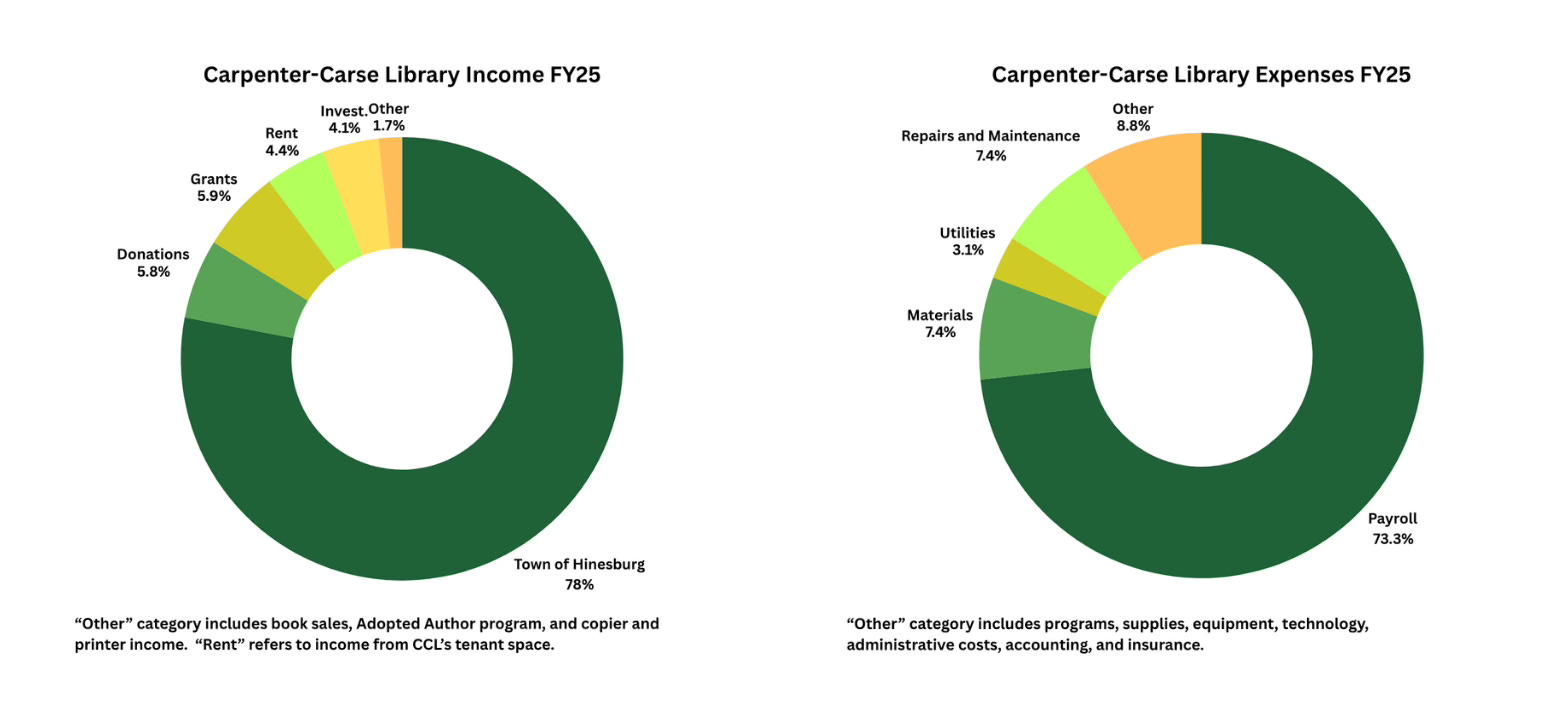
The library is not a municipal department but is an independent nonprofit that gets the bulk of its income from the town and the bulk of the rest comes from rent, grants and donations. In the FY2027 budget it will lose $14,700 in rental income.
And expansion of the community room has long been part of its future planning. It has had nearly 400 programs in the community room in the last year, nearly half to outside groups. Often, the room simply can’t hold all the people that come to the event.
Andersen explained that an active “Friends of the Library” group has plans for how to alter the rental space into the Community Room and also create small meeting and study areas.
“We have a new group of people who are taking (Friends of the Library) over, and they’re very motivated, and they’re excited,” Andersen said. “A lot of them have young children who participate in our events. They’re excited for the prospect of expanding that programming space.”
The current community room, she added, is not suitable for a lot of events including some children’s programs. A larger room, a conference room and private study spaces will add much to what the library can offer.
Andersen said there will be a concerted effort to secure additional grants this year, although “you can’t pay people with grants. You can’t pay your utility bills with grants.” Nonetheless, she is projecting an increase of $11,750 in grants to partially offset the loss of rental income.
Interestingly the allocations for books and materials is down, in part because the library has discontinued several of its digital services which are inordinately expensive.
Andersen had this final thought: “The care for the library comes from the people who are here and run it and put a lot of thought and time into making sure that what we’re offering meets the community’s needs.”
