

First Collaboration Between Hinesburg Resists and Central Vermont Solidarity Singers
Members of the groups joined together for an evening of singing and discussion about song as a vehicle for protest.
By Claire MacDonald
Hinesburg Record Staff Reporter
The United Church’s parish hall echoed with the sounds of voices raised in unison, punctuated by a tambourine and clapping, as singers swayed in their chairs to the rhythm of both traditional and newer political resistance songs.
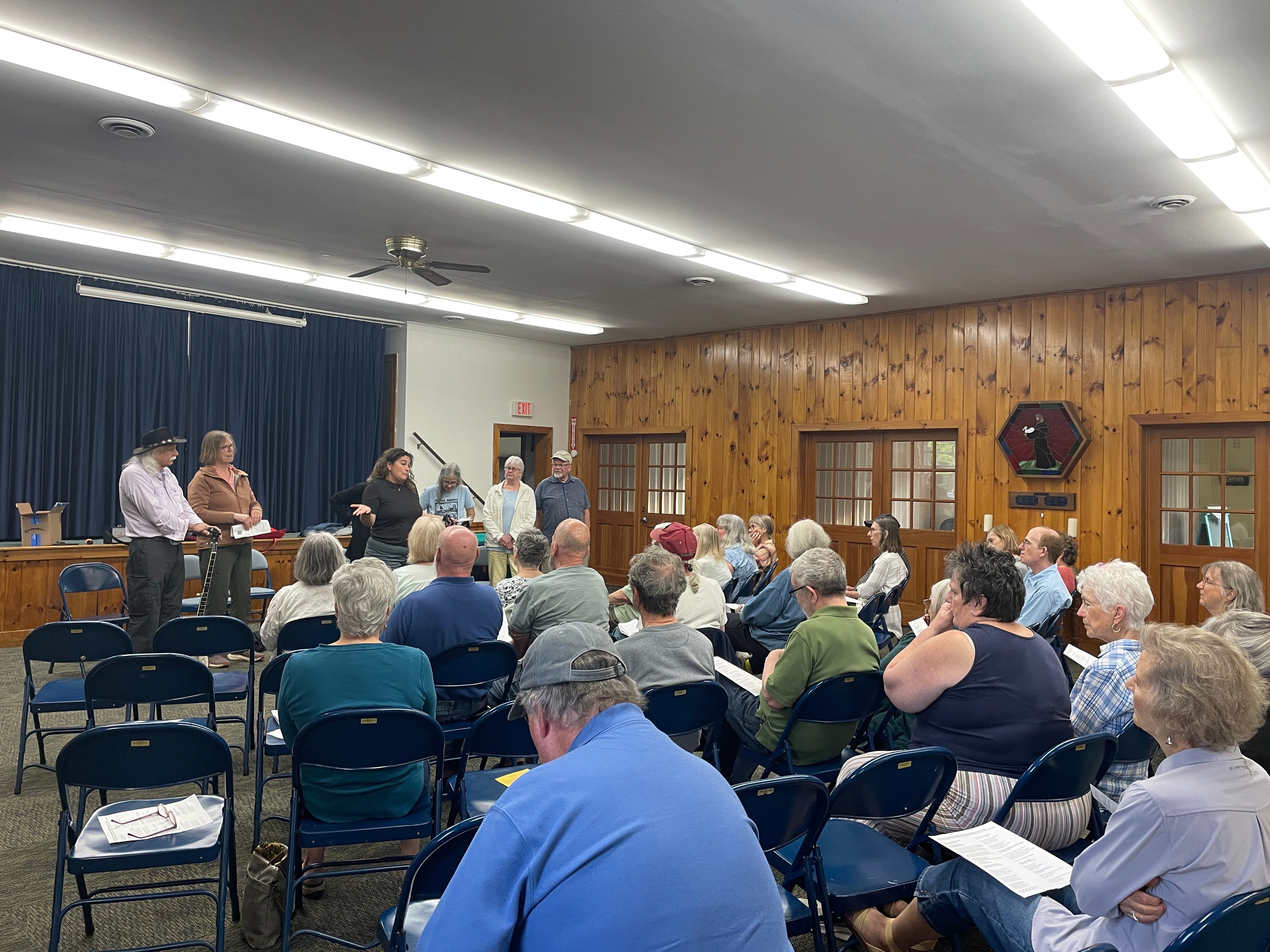
Members of Hinesburg Resists, led by folk singer and member Rik Palieri, were joined by six members from Central Vermont Solidarity Singers on June 24 to teach songs that the group will use in their march during the Fourth of July parade.
They intend to focus on celebrating immigrants in their march, Palieri said.
“Immigrants have become such a targeted group, and we want to make a statement against that,” Hinesburg Resists member Howard (“Howdy”) Russell said. “[We want to] highlight the many people who have come to this country and provided amazing contributions towards who we are.”
The event was the first collaboration between Hinesburg Resists, which began in March 2025 as a response to the re-election of President Trump, and Central Vermont Solidarity Singers, started in 2017 after Trump’s first-term inauguration.
The Solidarity Singers, based out of Montpelier, practice twice a month and have sung at all three No Kings rallies. They were especially galvanized by recent ICE activity across the country and seeing Minneapolis’ response, director Leah Greenberg said.
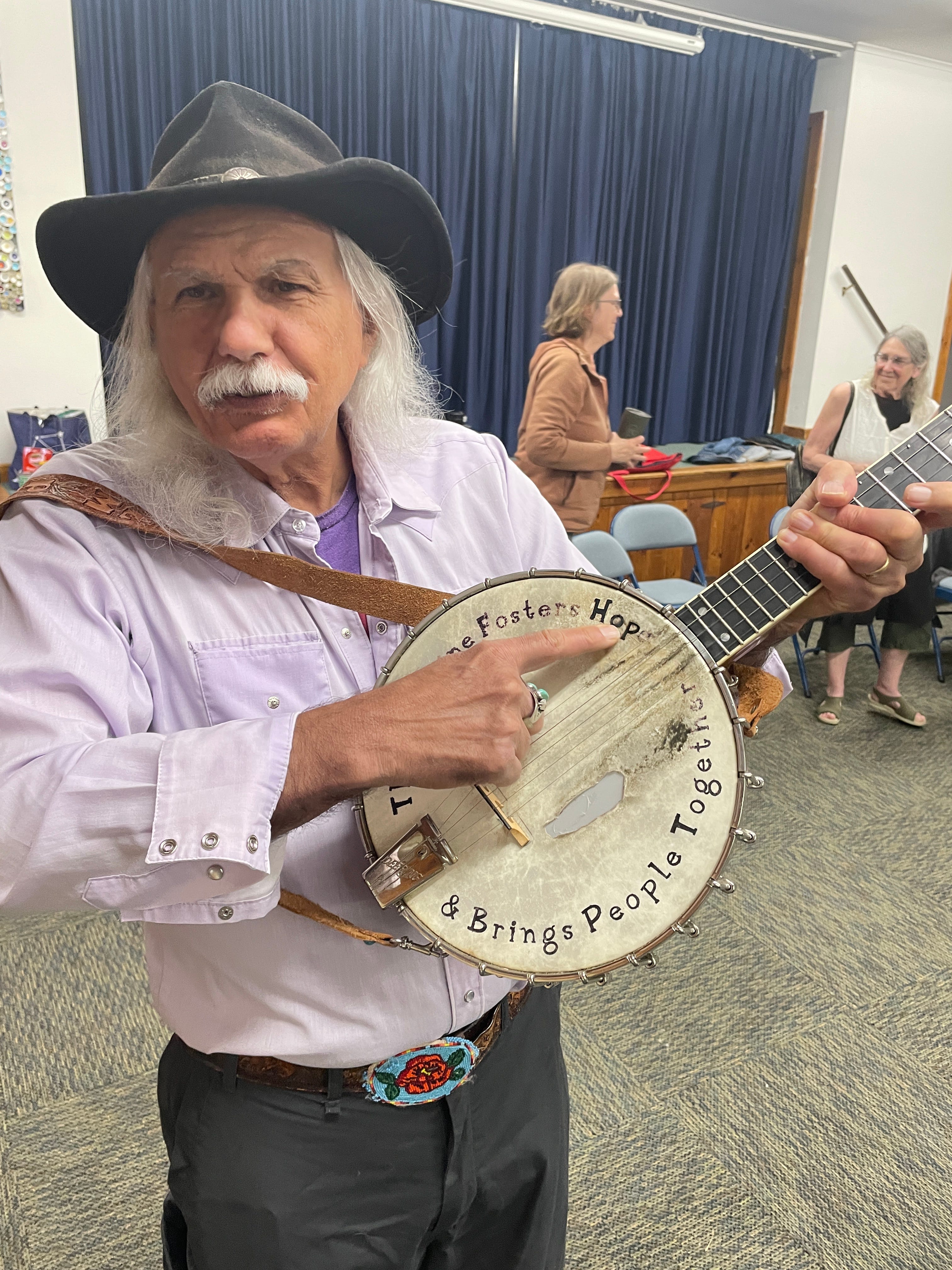
Palieri strummed a banjo, hand-lettered with the words: “This machine fosters hope and brings people together.” Songs of the night included versions of spirituals, such as “Ain’t Gonna Let Nobody Turn Me Around;” adaptations of familiar tunes, like “My Country, Tis of Thee;” and household songs such as “This Land is Your Land.”
Between the songs, Palieri, Greenberg, and Solidarity Singers leader Donia Prince shared reflections about the background and history of song as a protest mechanism.
“What’s really important here – and the reason that I did this – is because for a long time, in recent history, music [in protests] has dropped off,” Palieri said. “A lot of young people, they just wanted to chant. They did not want to sing.”
He said this shift recently started reversing, as young people began re-incorporating classic songs into their movements.
Russell said he believes the singing used in Minneapolis’ protests this winter captivated audiences around the country.
“Chanting is one thing, but singing is passionate,” Palieri said. “It’s powerful when you hear a bunch of people singing. Music has always been this tool to gather people.”
Hinesburg Resists’ plan to march in the parade has sparked some controversy, especially online, Russell said. Last year, there were statements made online about how the group’s involvement in the parade “ruined” the day for some.
“We’re here because we love America,” Palieri said. “There were times where things weren’t perfect, but at the same time, there was a freedom to say what you wanted to say without fear of reprisal. We’re at a different point right now, and it’s important that we make sure we have our voices heard.”
The night closed with the singing of “Hold On,” written by Vermonter Heidi Wilson and popularized during the recent protests in Minneapolis.
“Hold on, hold on,” the room sang. “My dear ones, here comes the dawn.”
I especially enjoyed Rik Palieri's performance of Pete Seeger's "If I had a hammer 🔨", and Woody Guthrie's "This Land is your land" ‼️✌️🤠