

Life on the Head of a Pin: A Passive Choice
When a medical protocol becomes a routine, something you just do, something you don't notice.
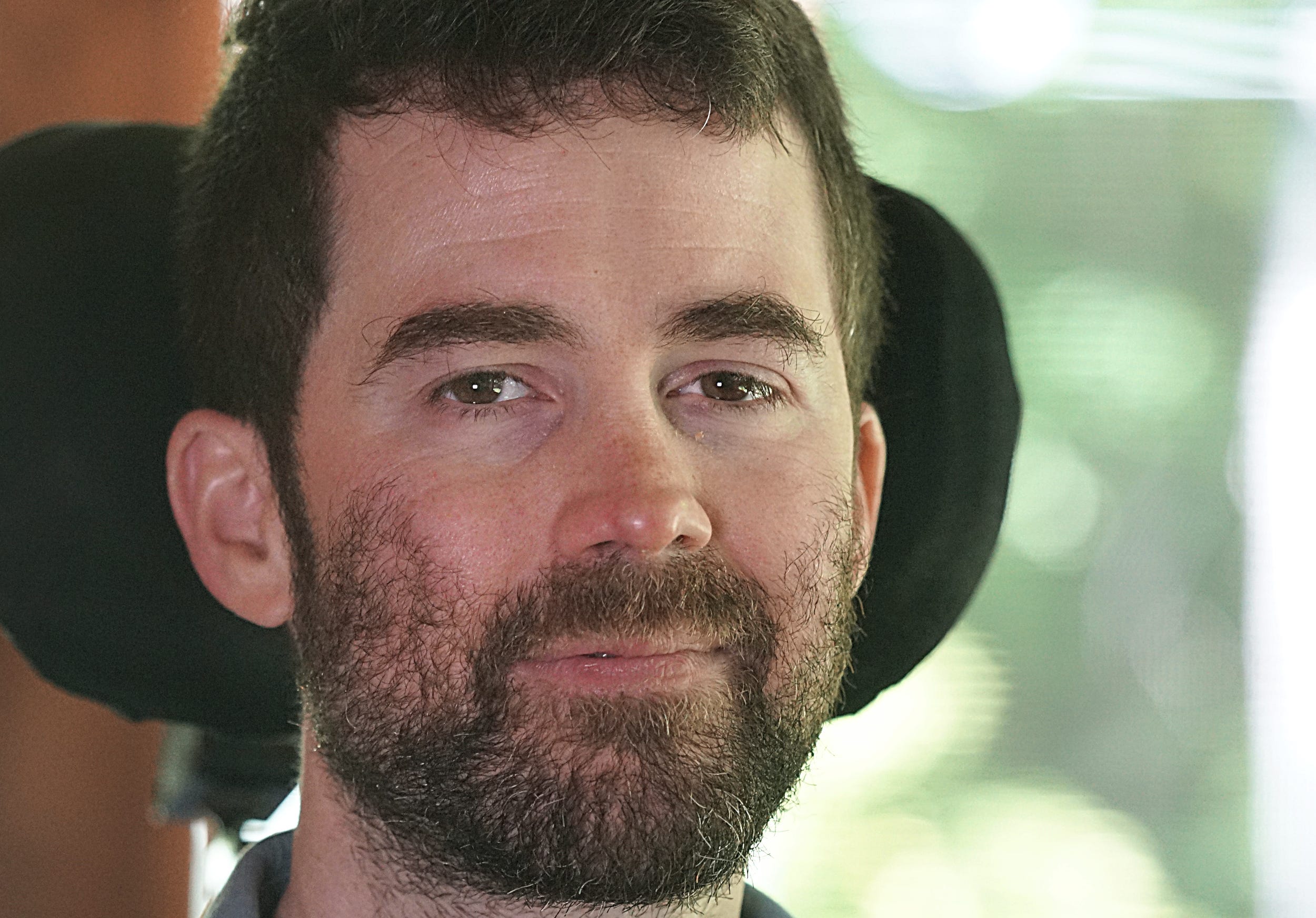
“Life on the Head of a Pin” is a monthly column. The author was diagnosed with amyotrophic lateral sclerosis (ALS) nearly 15 years ago. He writes about his life and its challenges the first full week of every month. A Hinesburg resident, he currently serves as a mentor at Hinesburg Community School. To read his other columns, click here.)
By Nate Methot
For The Record
I started on Wellbutrin last year, and upped the dose a few days ago. I was out of refills and could only ignore the voicemails and emails so long.
A little white cylinder has been part of my morning routine for a year. And that’s what it was: Routine. Automatic. Without thought. Finally prompted, forced to check in with my doctor, I considered a change, a double or nothing.
I had been prescribed an antidepressant the day I was diagnosed, almost 15 years ago. Part of the protocol. I don’t, and didn’t, know what it was, but I took it. I did what they told me – for a time.
In that first go-around, I pondered antidepressants vis-à-vis my particular predicament: I was just diagnosed with a terminal illness. I should be depressed. Right? Anything else would be unnatural. These things mattered to me. There was a difference between someone leading an outwardly fulfilling, hopeful and contented life (or even, potentially so) struggling with depression, and someone with every reason to spend his days in bed, sit and cry in the dark, and generally collapse in on himself. A big difference.
It felt phony. I didn’t want to put on their rose-colored glasses. Like the therapy and the Riluzole I was taking to ever-so-slightly prolong the inevitable, any antidepressant seemed useless, like showing up at a homeless shelter with movie tickets. I only cared about one thing (and still do) – my health – and a mood-altering prescription drug would do squat.
I stopped that first drug after a couple of years, and replaced it with another. Its trial period was much shorter due to heavy side effects. Besides zoning out in traffic, it made my already unsteady gait far worse. I could never take something that posed any risk to my mobility. I stopped and didn’t find a substitute.
Until the Wellbutrin a dozen years later. To think of all that happened in between: I was coerced to move out my apartment above a garage, whose staircase I tumbled down only once; my live-in fiancée left me a month before the wedding day and just after I’d closed on a house; I began to fall with increasing frequency and danger, resulting in two separate stitch-ups, one 9-1-1 call and ambulance ride, and an unknown quantity of concussions; and finally, I was forced to sell my house and car and move in with my parents – not to mention actually live with them, through a pandemic and otherwise. None of this got me back on an antidepressant. I don’t even remember considering it. But had I been on one, I likely would have taken that little pill every morning.
What am I getting at? I think it’s this: The default is powerful. It doesn’t feel like a choice, but it is. A passive one. How many things do we just do, without thought? Do our defaults – whether self-generated or from the outside, protocol – still serve us? Large and small, they’re worth considering. Noticing. We should do more noticing. (Not on your phone. Stop noticing your phone so much.)
So, why did I start back with an antidepressant? The power of suggestion. Has it done any good? I don’t know. Maybe?