

'Life on the Head of a Pin' – Authenticity
Columnist looks at the transformation from hiding to being open.
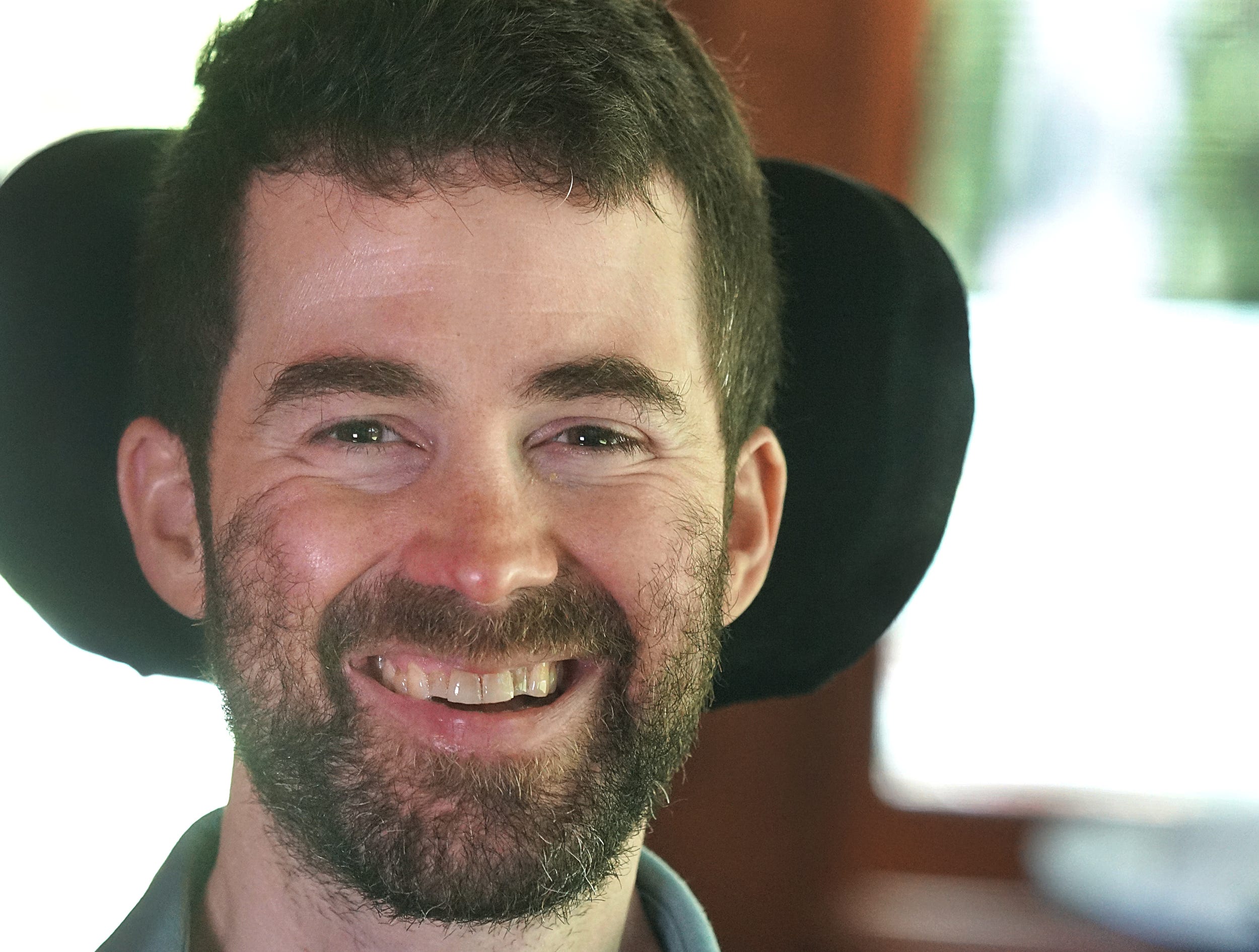
(Editor’s note: “Life on the Head of a Pin” is a monthly column that appears on the first Thursday of the month. The author was diagnosed with amyotrophic lateral sclerosis (ALS) nearly 15 years ago. He writes about his life and its challenges every first Thursday. A Hinesburg resident, he currently serves as a mentor at Hinesburg Community School. To read his other columns, click here.)
By Nate Methot
Hinesburg Record columnist
My mom sat beside me as I was diagnosed with ALS on a Wednesday morning in August nearly 15 years ago. I’d tried to keep both my symptoms and the resulting series of doctor’s visits from my parents but didn’t go so far as to call Fletcher Allen (now UVM Medical Center) to make a long overdue change of address. The first couple mailings were not questioned – or explained away easily – but when the envelopes began to pile up, I had no choice but to cave.
That’s how I operated, keeping everything inside until I was cornered.
The people around me knew something was wrong – they had to know; my body was deteriorating right in front of them – but I told no one and bore the heavy weight of uncertainty, anxiety, fear, all on my own.
Until a few days after my diagnosis – as much as 18 months after the mysterious symptoms began – aside from my parents, only my boss knew anything was going on. Sitting across the table from him in a tiny windowless room for our less-than-regularly attended monthly one-on-one, tears and sweat poured from my body as I tried to find the words to explain my numerous medical absences. I told him what I told myself – like anyone in any health matter – I prayed it was something fixable. What he saw was a terrified kid trying to hide a boulder of emotion behind a particle of hope.
I remember the relief afterward: I didn’t care how I looked as I walked back to my desk. Face flushed, eyes puffy, and skin glistening, maybe I wanted to be caught. Whatever I felt, it wasn’t enough to get me to repeat those words to anyone else. I’d keep hiding, pretending, scared and alone.
There are a lot of downsides to hiding – watching another day pass, disconnected from the world and yourself.
On the drive home from the hospital, Mom asked about telling my friends. I saw them that night but couldn’t force out the words. Two days later, I made a safe space among them; it took just a few moments. It would be another 18 months before I told almost anyone else. In between, I stuck with that group like a soldier his platoon. They protected me, though the dangers outside were of my own making.
I now share readily with strangers: my thoughts and actions – even my feelings. (Admittedly, it’s easier in print.) I’ve lost a lot of fear on this journey; a lot of things seem petty and undeserving of attention. Or, it’s possible I’m numb, broken, and just don’t care. I’d like to think I’ve grown. Matured. I’ve had fifteen years.
But it’s hard to share bad news. Devastating news. I’m not sure it would be any easier. In fact, I’m certain it would be just as difficult. Maybe I still keep the darkest of my darknesses inside, letting them linger in the background, mostly unchecked, like cockroaches in the walls. Hoping they’ll stay where they are. And knowing they won’t.
So, when you ask how I am, maybe I’ll tell you. For real.