

Monkton Historical Society: Ordinary People Doing Extraordinary Things
Small town history comes alive thanks to efforts of dedicated society members
By Maeve O’Neil
Via Community News Service, a University of Vermont journalism internship, for the Hinesburg Record
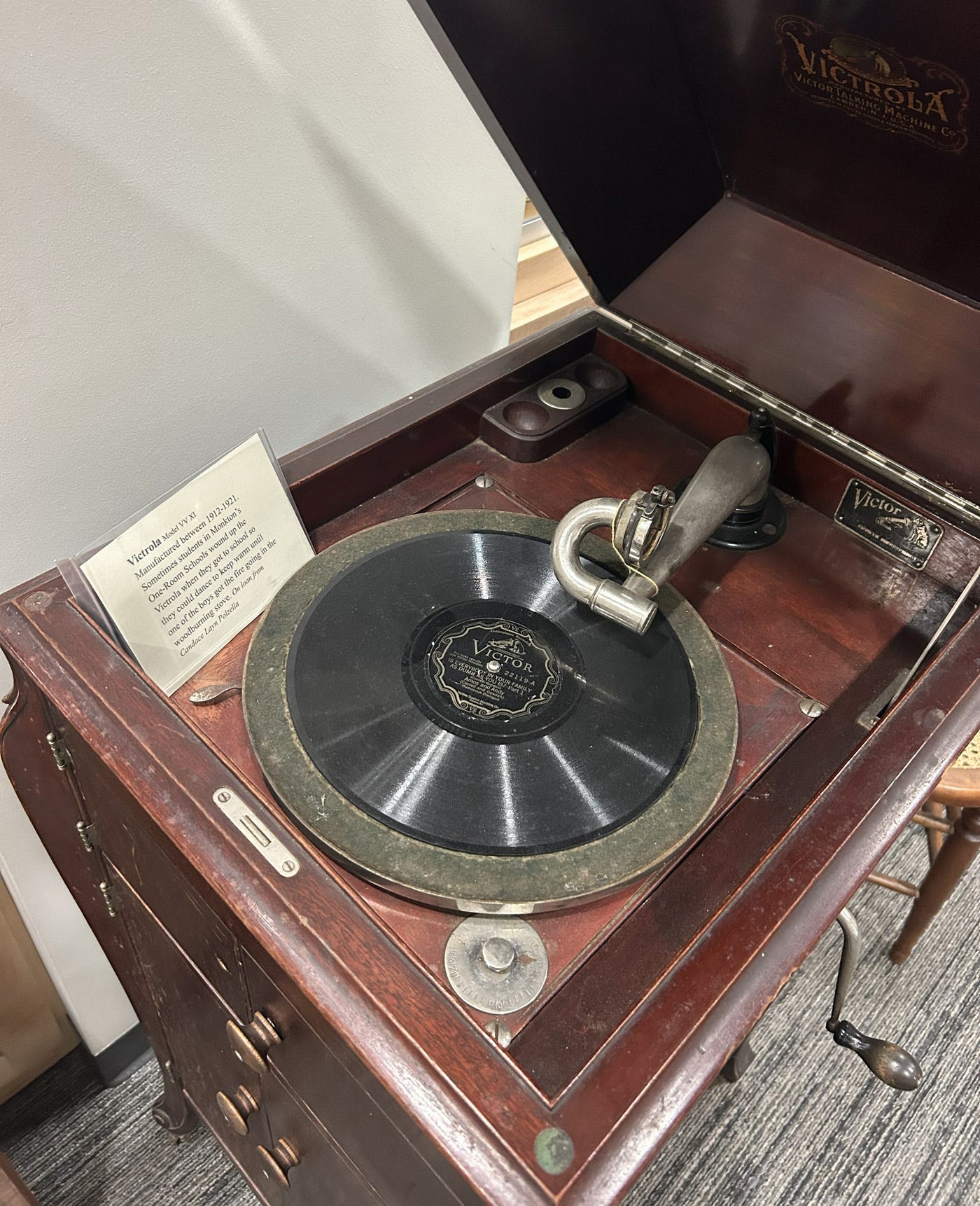
On bitter Vermont mornings, Monkton’s one-room schoolhouses came alive with song and stomping feet as children danced to the Victrola, keeping warm while the older kids worked to bring the wood stove to life.
By 1880, Monkton was home to nine one-room schoolhouses. Although they are now long closed, their history has been preserved by Lauren Parren and colleagues at the Monkton Historical Society’s new museum, which opened last July. The quaint museum off Monkton Ridge Road has three exhibits jam-packed with captioned photos, biographies and artifacts on loan from community members. The museum is located in the Monkton Town Hall and shares a space with the Russell Memorial Library.
The museum’s mantra, “ordinary people doing extraordinary things,” couldn’t be more true to the work of volunteer curators Lauren Parren, Cindy Walcott and Candace Polzella as they share stories of Monkton’s past.
The exhibit on the schoolhouses is near to Parren’s heart. As a former educator, she believes it speaks to the resilience of teachers at the time.
“I was a school teacher. I was overwhelmed when I had one ninth-grade social studies class that had 25 kids in it. I had one subject, one age group, one goal,” Parren said. “These teachers in Monkton had eight grades, eight subjects, and 25 kids from ages five to 18. That’s extraordinary. And they were just ordinary people who did this.”
The exhibit features many artifacts, including yearbook photos, with names still relevant to Monkton today, old novels and children’s books, students’ preserved homework, a Victrola and a school desk. The collection helps resurrect the old school houses, humanizing the past with personal objects and real people.
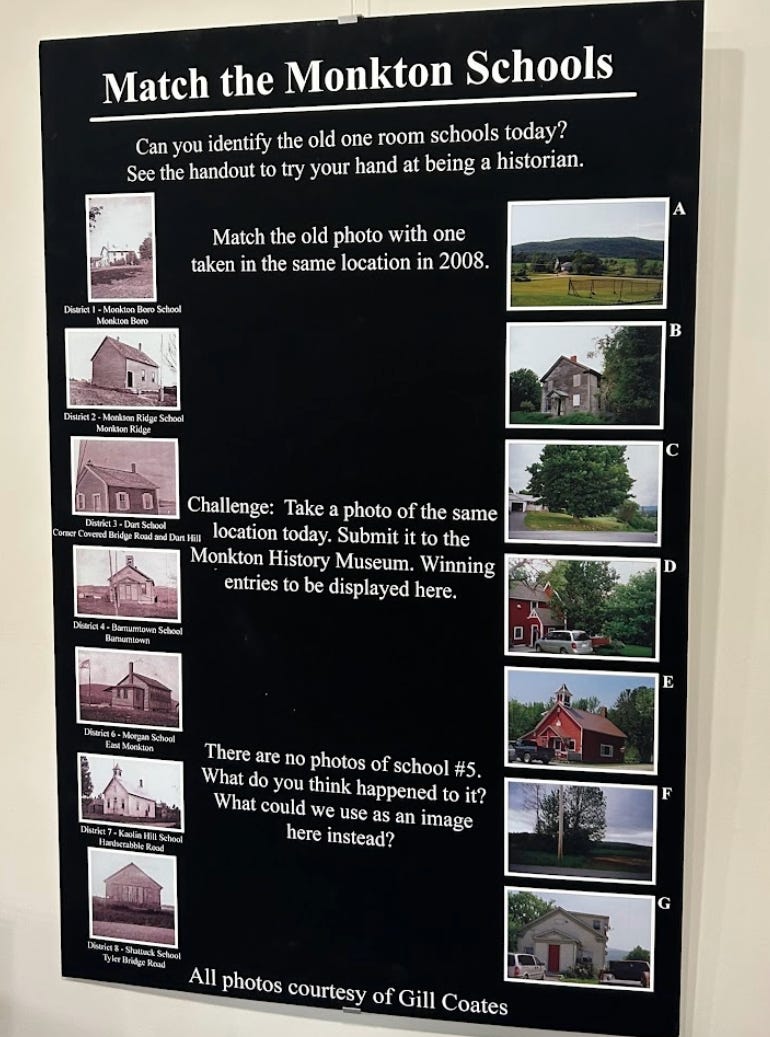
Alongside these artifacts is a display of photos taken by Gill Coates, a longtime Hinesburg resident who served as president of Monkton Historical Society for 16 years, showing one-room schoolhouses as they’ve aged.
Other exhibits feature biographies and artifacts of residents who served in World War II and a display of general stores. Preserved advertisements and display cases from Monkton general stores highlight the selection of groceries, gas and goods that could be bought, all at prices that are humorous by today’s standards. In 1945, a pint of ice cream cost just 11 cents.
The exhibits came together as a result of teamwork and no one person could have created them alone, Parren said.
“Listen to all the different groups in town who are helping pull these stories together. It can be a unifying factor. People you might think you have absolutely nothing in common with politically, well, when you start talking about some of these other things, it’s, wow, that’s cool, I thought that was really cool too.”
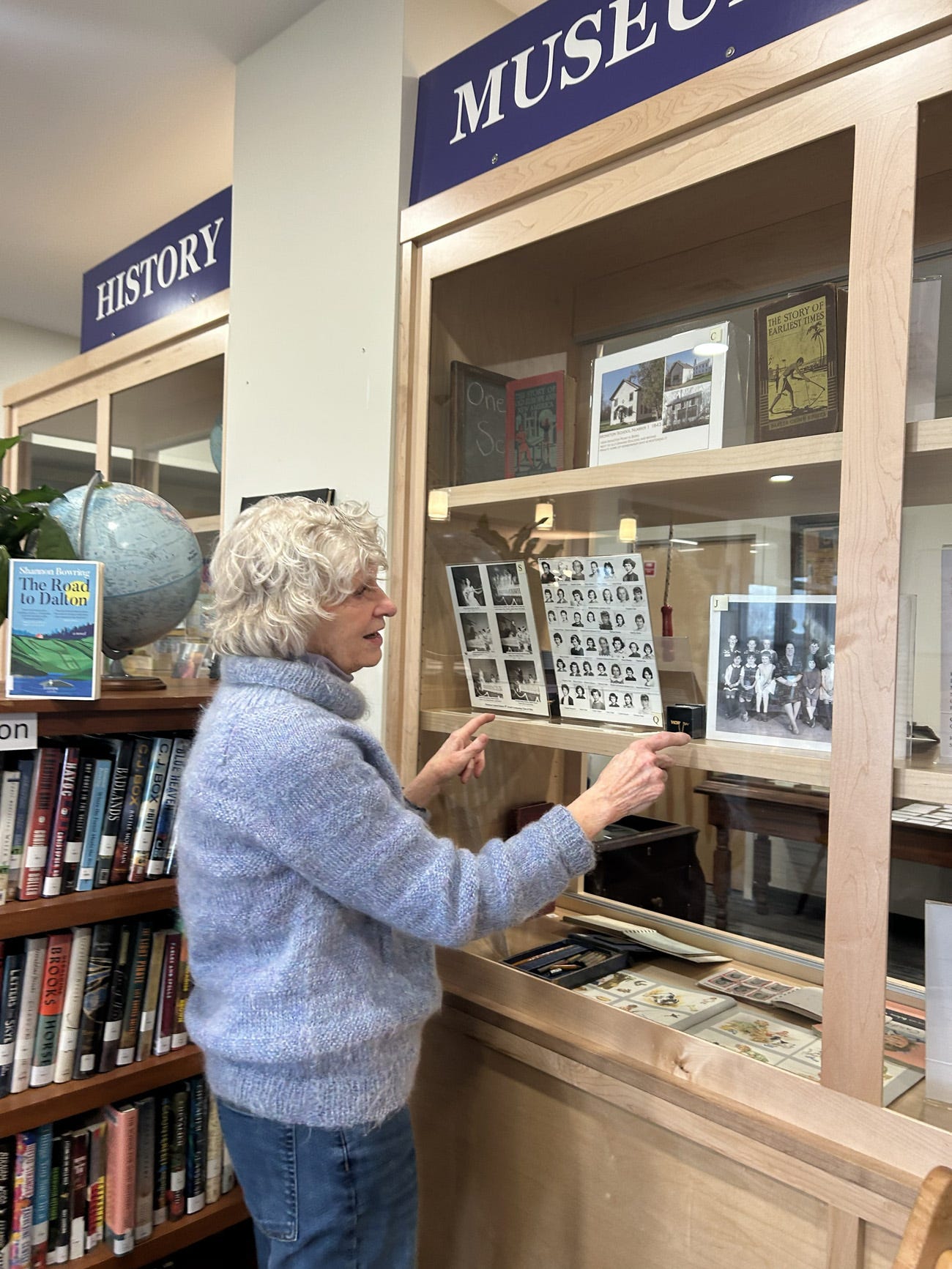
The Monkton Historical Society network extends to neighboring towns, businesses and friends who have dedicated time and resources to the society. The Monkton museum hosts semi-regular events, including photo scanning sessions, gravesite cleaning and speakers from all over Vermont, creating a space for community members to learn and share the history of the land they call home.
Monkton Historical Society also works with neighbors. The historical societies of Monkton, Charlotte, Starksboro, Bristol, Addison, New Haven, Ferrisburgh and Lincoln have been meeting for over a year to share ideas, resources and a passion for small-town history.
As the United States approaches its 250th anniversary, these societies have designed a Passport to History project to engage young students and their families. In participating towns, young historians will embark on a scavenger hunt, visiting historic sites and collecting a unique button from each location to add to their passport booklet.
The booklets will be available at libraries, town clerk offices and local museums, inviting anyone interested to join in and explore their town’s history. The initiative reflects the museum’s goal to be accessible to all, encouraging community members to actively engage with the materials it preserves.
Beyond the Passport to History project, this summer Walcott and the curatorial team are preparing fresh exhibits for the public. They approach exhibits with basic goals.
“We’re interested community members,” Walcott said. “So (it’s about) trying to figure out how to design exhibits that are appealing, that are within our means, which will get people to slow down and look.”
Upcoming exhibits will focus on pre-European contact and Revolutionary War history, featuring collaborations with the Vermont Archaeological Society, the Ethan Allen Homestead, Chimney Point State Historic Site and Vermont state archaeologists.
“The support we are getting to put together this next exhibit is unbelievable,” Parren said.
The story of the Historical Society is a living exhibit of ordinary people doing extraordinary things. With a mission to share tales once forgotten, the society breathes life into small-town history, inspiring Vermont towns and their residents to join its mission.
“I guess I’d say, in a more sort of esoteric way, we just want to help preserve history, because it’s disappearing right before our very eyes,” Parren said.