

My Story: How I Got Hooked on the Pipes
Hinesburg musician Rik Palieri tells the story of how he became entranced with Polish bagpipes – an audio story.
(Editor’s note: This is part of a series where Hinesburg residents tell a story centered on a memorable personal photo. The Record’s former intern, Chelsea Burton, produced this story, conducting the interview and editing the audio and text. While the text is below, this is an audio story. Click the player above to hear Rik tell the story with his own voice.)
By Rik Palieri
The Hinesburg Record
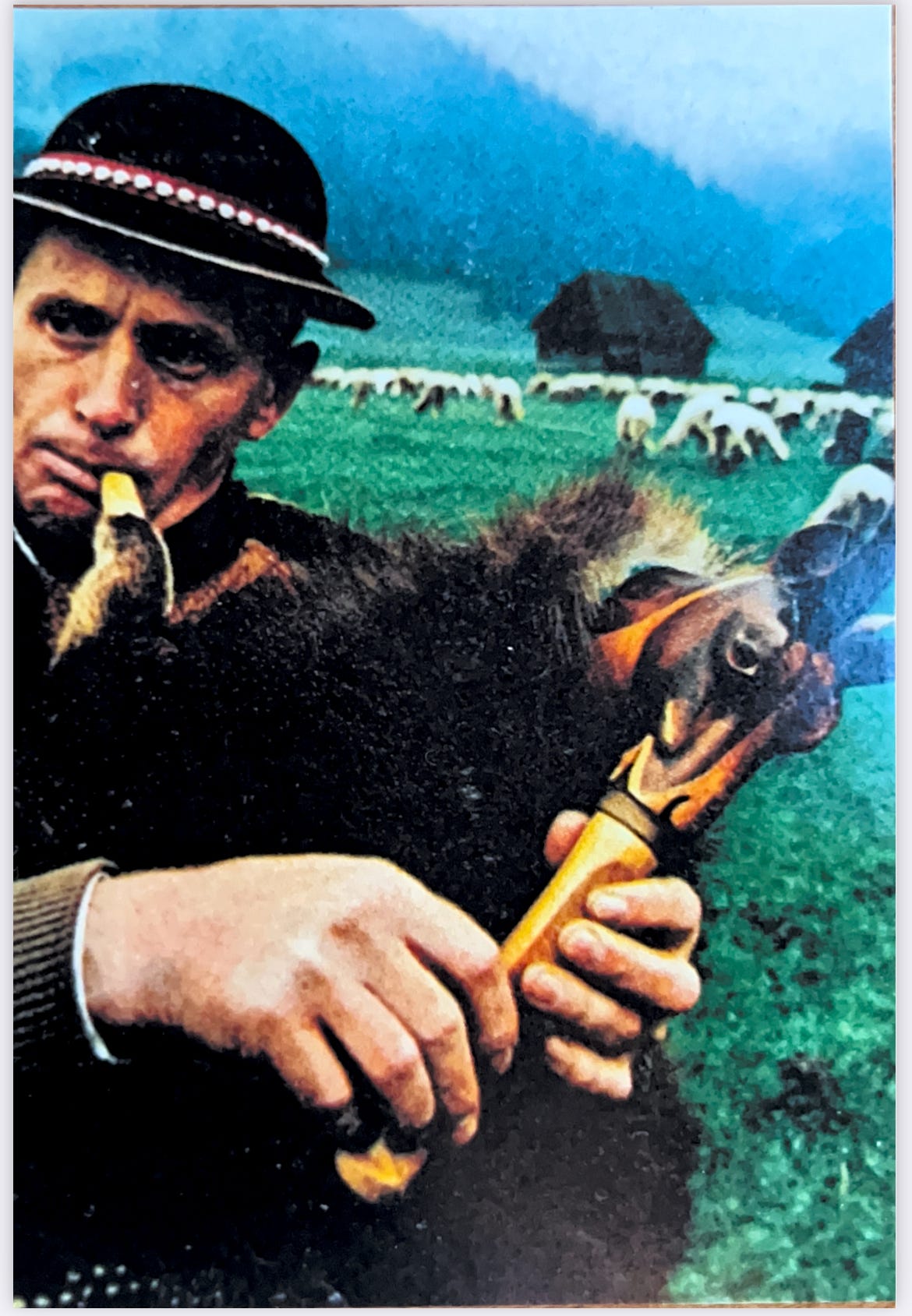
It happened back in the mid-1970s that I was at a friend’s house looking through a National Geographic, and I saw this photo of a Polish bagpiper. Being of Polish background: my mom was born in Poland, my father’s part Polish: I had never heard of anything like a Polish bagpipe.
That photo really got me intrigued to find out more information about this unusual instrument. I didn’t realize how unusual it was until I started trying to do research, and I found out very little information. And back then – this was way before we had a Wikipedia or Google or anything like that – you had to do research, real research. And that’s what I started doing. I started putting together information about this instrument.
In 1980, I wrote a letter to the Polish government. They had sponsored a festival, a world festival, and they invited me to come to Poland. And there I got a chance to see some Polish bagpipers and actually learn about the whole idea of what is a Polish bagpiper and how is it important in the culture.
And so I had met this man called Yusuf Broda and he was one of the best bagpipers in Poland; and he’s still living and he still is a great bagpiper. He gave me some instruction on the bagpipe and then I started trying to learn how to play it and realized that the only way to really learn how to play it was to go there and live there. I was hunting around and writing for a grant for Polish bagpipes.
And after a few rejections, I did receive a fellowship from the Kushushko Foundation in Poland, and I lived with Yusuf Perda in the mountains of Eastern Poland. And that’s how I learned how to play the pipes. There’s about five different styles of Polish bagpipes, each of them having a different sound and a different appearance.
One of the things you notice is they have this wooden carving on the top of the bagpipe that looks like a goat, and that’s because these were an early form of recycling, where they learn how to not discard any part of an animal. So when a goat died, instead of just, you know, getting rid of it, they turned it into a bagpipe in certain regions. And that’s why they have the symbol of the goat to remind you of where it came from.
And so I’ve been playing these Polish bagpipes, and I’ve played a lot here in Hinesburg. It’s a fascinating kind of thing to carry on an old tradition. Very different than just playing the American folk music that I usually play.
You’re representing something much bigger than you are. You’re representing a culture. You’re representing a region.
So I went out and I did over a thousand schools across the United States, me and my dog, Koza, which means goat in Polish. So Koza and I traveled all over in my VW microbus and played to thousands and thousands of school kids, teaching them a little about the old traditions of Poland.
It takes more than hot 🔥🥵 air to play 🛍️ bagpipes ‼️👌🤠 Awake and sing, you will definitely be heard ✌️😎