

The Peck Family Legacy Lives on at Hinesburg Community School
The story of how a nearly century-old gift continues to give back to Hinesburg education
By Maeve O’Neil
Via Community News Service, a University of Vermont journalism internship, on assignment for the Hinesburg Record
Hinesburg Community School students are taking to the stage with brand-new lighting and curtains purchased with help from an enduring local philanthropic fund that began back in 1934.
Known as the Peck Estate fund, the bequest has supported not only the school theater program, but also field trips, early literacy and many other educational needs for more than 90 years.
The fund is evidence that caring about local students is a long tradition, suggested Hinesburg Community School Principal Tim Trevithick.
“I think it says that the community values education. And it shows up in this way, in a really powerful way.”
Today, Hinesburg residents who see the Peck Estate mentioned in town documents might not know the origin of the fund or the prominent local history of the family that created it. Lucy P. Coleman France, who died in 1934, was the niece and adopted daughter of Cicero Peck.
She left a provision in her will that bequeathed four-fifths of her father’s estate to the town of Hinesburg. She designated that the trust and its income could only be used to support education in the town.
Municipal donations are not uncommon in small-town Vermont, but the Peck Estate stands out for its unique commitment to education.
The Peck family name is known for its longstanding commitment to Hinesburg. Beyond dairy farming, Cicero Peck served in numerous town roles, including selectman, moderator, town agent and grand juror. His uncle, Asahel Peck, served as governor of Vermont, and his father, Nahum, was a lawyer and state legislator.
Cicero Peck attended Hinesburg’s common school and Hinesburg Academy but due to health issues couldn’t attend a collegiate university. Despite this, he remained involved in education and spent 15 years on the school board, some of those as chairman, and served as superintendent of schools from 1877-1884 and 1891-1894.
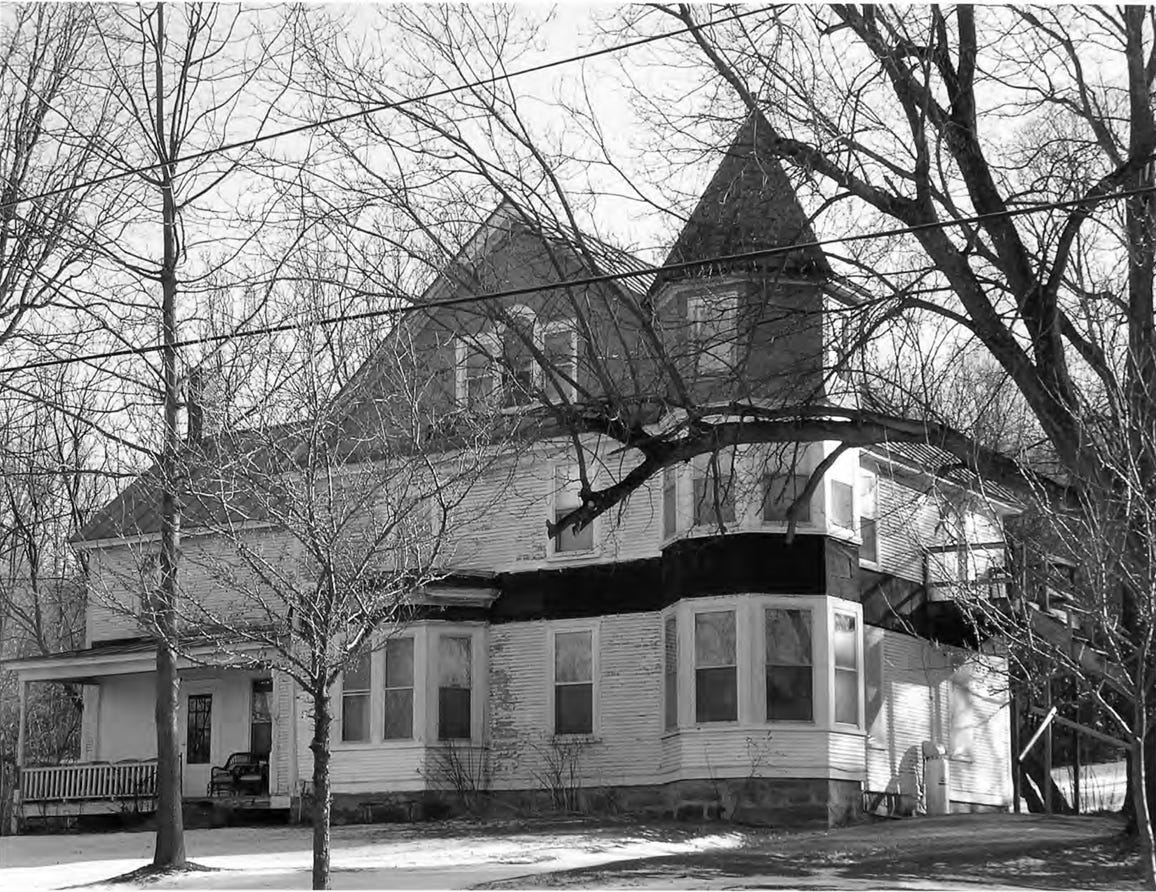
Cicero Peck’s estate and farm were located off Mechanicsville Road and included the historic Queen Anne-style house built in 1896.
As of 1938, the fund was valued at $13,673 with an additional 29 shares of Howard Bank stock and 12 shares in Merchants Bank stock. By October 31, 2025, the value had reached $1,150,592, thanks to an investment strategy and partnership with Hanson & Doremus Investment Management that allowed the original donation to grow and gather compound interest even while annual allocations were made.
Trustees elected by the town are responsible for the investment, allocation and overall management of the fund. Currently, Frank Twarog serves as a trustee alongside Jennifer Wilkinson and Heather Roberts, Hinesburg town clerk and treasurer.
In 1944, the trustees purchased a boarding house for teachers, located off Vermont 116 in Hinesburg village. The house was rented to teachers until its sale in 1979. The trustees held the mortgage of the property and acted as a bank to help grow the fund.
Twarog describes the fund as a unique asset for the Community School to provide supplemental opportunities for students and teachers.
“Projects like climbing walls, adaptive structures on the playground, new creative chairs, bouncy chairs, the district’s not going to pay for that stuff,” Twarog said. “The district’s only going to pay for the needs. And so that’s what’s really satisfying about the Peck Estate, and as a trustee, is being able to offer that money.”
Each year, the trustees distribute a percentage of the fund to the school, typically between 2.5 and 5 percent of the total fund. In 2025, this amounted to $50,750. The investment performance of the fund helps determine allocations, with the goal being to keep the principal invested and allow the fund to last into the future.
“Most years there’s been a net increase,” Twarog said. “So we’ve been able to give somewhere in the $30,000 to $50,000 range every year.”
Even though the fund has been in place for many years, Trevithick stressed the importance of distinguishing the purpose of the gifted money from the yearly school budget.
“We take the Peck Estate as this piece of money that we don’t always know we’re going to get and use it for one thing at a time, spending to supplement or create additional things for our kids and our faculty.”
In deciding how and where to use the money, the school prioritizes projects that benefit all students. In a challenging budget climate, the fund is especially helpful. It has allowed the school library to renovate seating even when the furniture budget was frozen, for example.
The fund reflects a small town testament to community and value for education, some observers say.
“I’m new this year to the school, but I’ve picked up on the close-knit nature of the Hinesburg community, and the amount of people who have students here, or who work here, who came through the school system themselves, and the way they’re connected to each other,” said Alexis Kelly, Hinesburg Community School vice principal. “So I think it’s an interesting example of that going a little bit further than just our school building.”
The passion for education in Hinesburg is a story that continues beyond the Peck family’s civic dedication and bequest.
“Hinesburg is truly a community school, and it feels like that,” Trevithick said. “I think that the Peck Estate is really symbolic of that.”