

The Two Sides Meet: Polite but Little Movement
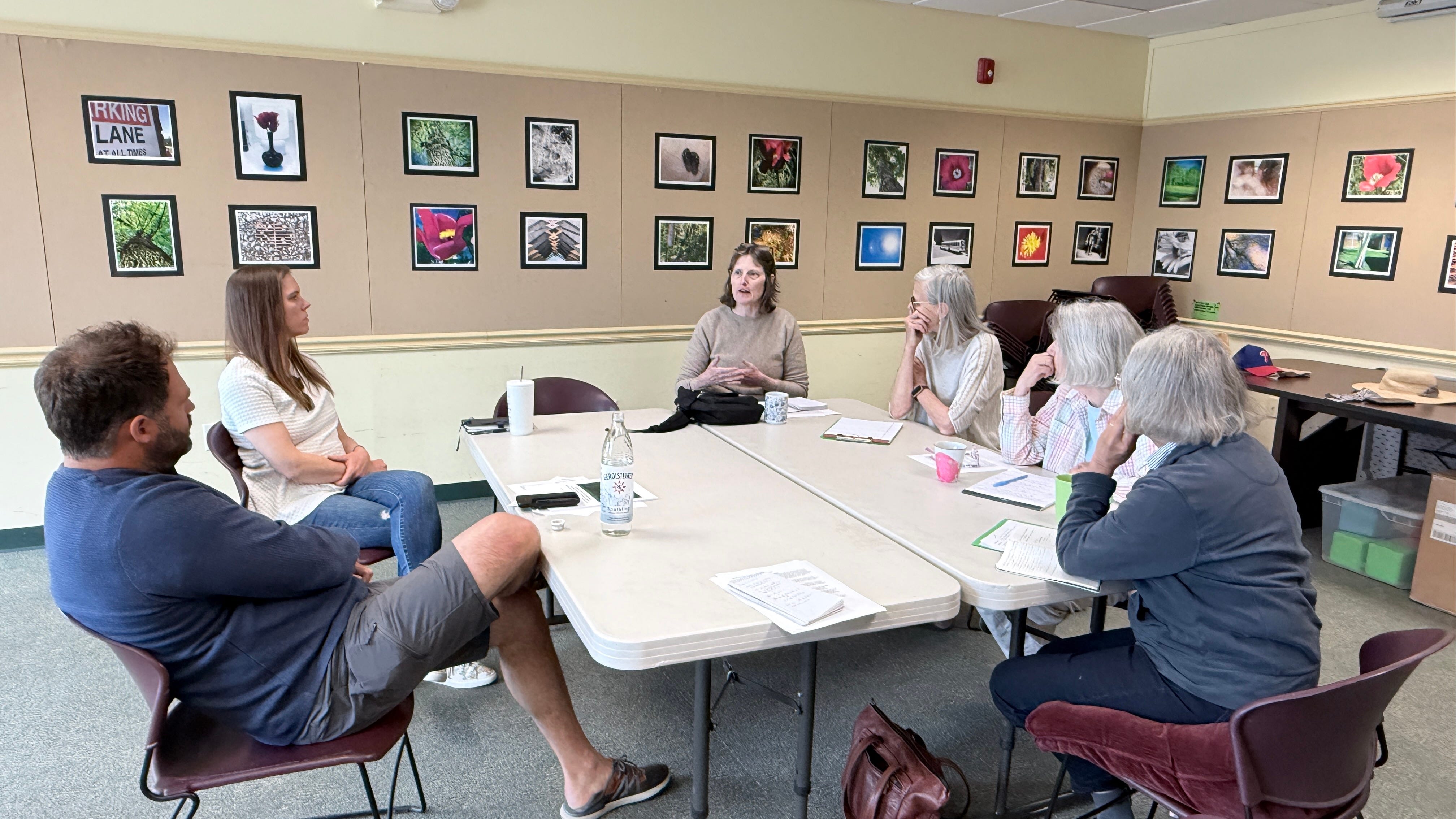
Eli Lesser-Goldsmith met with four representatives of the opponents of his group's proposed gift of an artificial field at CVU
By Geoffrey Gevalt
Hinesburg Record Staff Reporter
The two sides came together, spoke for an hour and twenty minutes, kept their cool, treated each other with civility and then parted – agreeing to disagree, no closer to collaboration than before. But at least they spoke.
On one side of the table was Eli Lesser-Goldsmith, a Charlotte businessman and spokesman for his group’s proposed $6 million gift of an artificial turf field, grandstand, lights, parking lot and accessible walkways at CVU.
“I wish we had gotten together a long time ago,” said Lesser-Goldsmith.
On the other were four representatives of Responsible Growth Hinesburg, a grass roots group that first formed to fight the proposed Hannaford’s supermarket some years ago: Jennifer Decker, Susan Schulman, Dena Monahan and Margaret McNurlan, who ran the meeting.
“If it was grass, it would be all good,” said Decker, clearly voicing the opinion of all the members of RGH.
Sarah Showalter-Feuillette, a member of the CVSD board, attended as an observer.
Both sides made their cases:
Lesser-Goldsmith said he wanted to clarify several things:
His group has, in fact, done an “extensive review” of the potential of a well-designed grass field but artificial turf won out for two key reasons:
“playability,” meaning that CVU athletes would be able to practice and play games in the “shoulder seasons” of March/April and October/November whereas now teams are restricted by Vermont’s weather and soggy fields on grass fields no matter how they are designed;
“maintenance costs” would be less, noting that maintenance of a high-end grass field is expensive; and,
he, too, is concerned about the environment but said that runoff from existing fields already is going into Hinesburg’s aquifer and contains PFAS (forever chemicals often in plastics) from soccer balls and cleats, and the project’s extensive storm water system will prevent runoff from leaching into the town’s water.
The opponents countered:
Communities around New England, particularly Easton, Massachusetts, are dealing with expensive clean-up of their water systems from runoff from artificial fields;
FieldTurf, the manufacturer the Community Field Project is aligning with, should allow for independent testing of the materials being used (the company has said it is not going to happen);
extensive studies showed the risk of chemicals and plastics associated with artificial turf both to the health of athletes, to neighbors (from airborne micro plastics as the field gets older) and to the aquifer; and
the way the gift appeared to be headed, CVSD would have no control over who was hired and what materials were used. (Lesser-Goldsmith said CVSD would have say, but no veto power on installers, turf company, material uses and contractors.)
Lesser-Goldsmith continued to insist that the field is “100 percent PFAS free,” later clarifying that the field “meets the letter of the law” in regard to the new Vermont law restricting PFAS in a variety of products, including artificial fields.
The opponents argued that the law only involves 40 of 15,000 compounds found in plastics and that it appears the state doesn’t test the product but relies on the manufacturer’s certificate of compliance. Lesser-Goldsmith argued back that the group should be approaching the legislature instead of holding his group responsible for restrictions not in the law.
RGH members repeatedly urged Lesser-Goldsmith group to reconsider an option of grass, but, later in the meeting, he countered, “why don’t you put together” a project to fund a grass field.
Questions about the indemnification that FieldTurf has reportedly granted the district were deferred to “that will all be dealt with in the memorandum of understanding.”
The back and forth continued showing that neither side was going to move from their positions. Decker provided printouts of materials written and researched by Andrea Morgante, former member of the Hinesburg selectboard, as well as a study done in New Jersey on grass versus turf. (materials below).

Lesser-Goldsmith agreed to read the material and had urged the group to look at the “deck” of slides he used this spring in outlining the project to the public, noting that extensive details of the storm-runoff plan, details of the field itself and design of the field and related parts of the project won’t be known until the engineers begin their work. Here is a link to the slideshow:

Editor’s note: The CVSD has hired an area geologist and toxicologist to study the runoff patterns from CVU and the potential toxicity of artificial turf. That study is to be completed by the end of the month, and Supt. Adam Bunting said no vote would be taken until there was public discussion of that study.