

(Update: Trillium Hill Farm’s farmstand is now open!)
By Maeve O’Neil
For The Record
Via Community News Service, a University of Vermont internship, on assignment for the Hinesburg Record
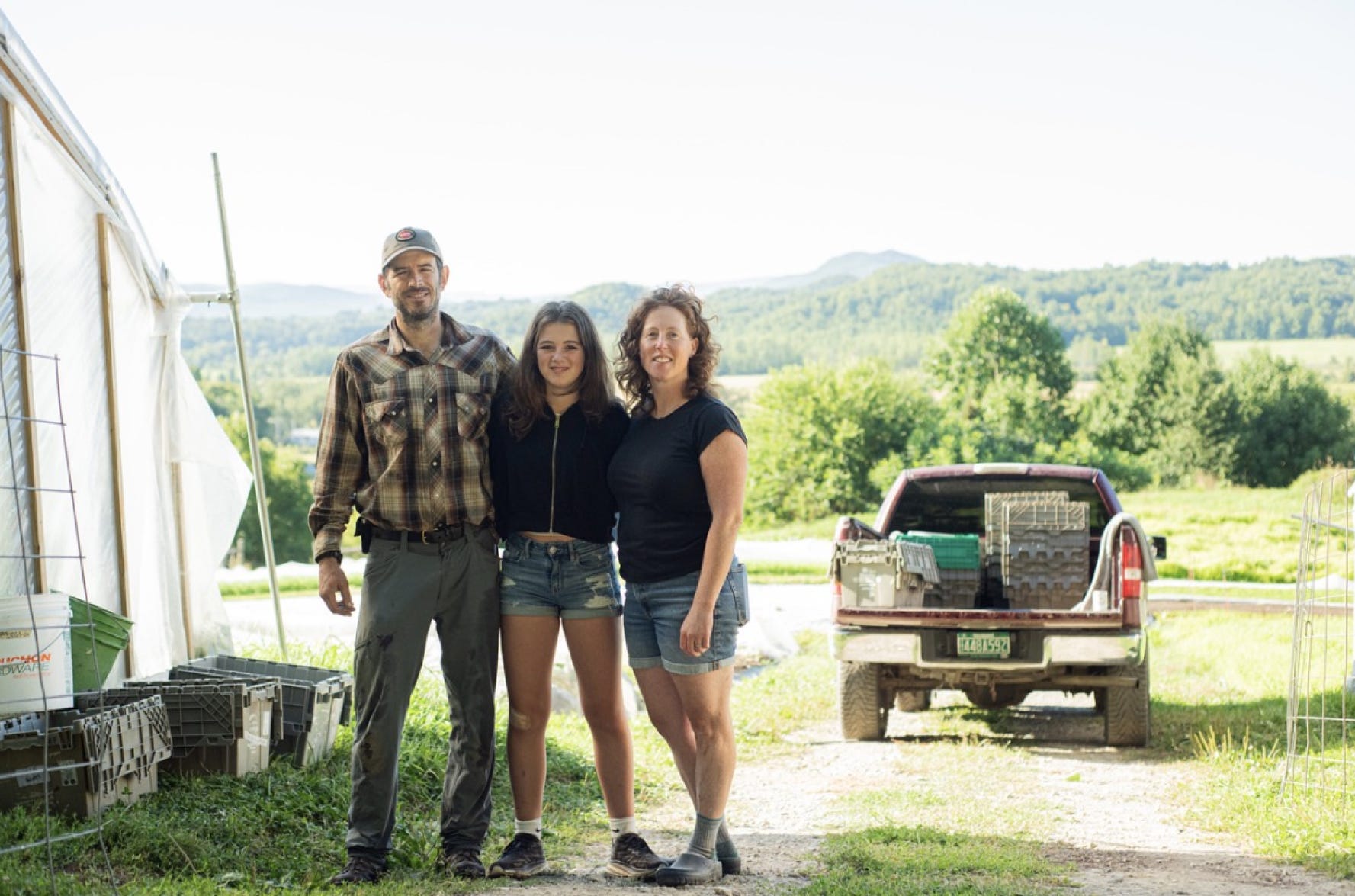
James and Sara Donegan have been working together to grow Trillium Hill Farm since 2008. The Hinesburg farm is currently preparing for the upcoming spring CSA season, offering hearty winter greens and root vegetables while focusing on growing food for its neighbors.
Through their involvement with the Northeast Organic Farming Association of Vermont (NOFA-VT), the farm provides subsidized CSA shares for those in need. In this interview, the Donegans shared their belief in the power of local food and their gratitude for customers whose enthusiasm makes the long days worthwhile.
Q. Can you introduce Trillium Hill Farm?
Sara Donegan: James and I met in 2006, and the land is his family’s land. James started Trillium Hill Farm in that year we met, 2006, and I joined in 2008. The two of us have been running the business together since 2008.
In production, we have less than two acres, but the home farm is around 100 acres. Some of that acreage his family uses for sugaring, under Little Woods LLC, and we own around 70 acres.
James Donegan: It has certainly always been important to us to have a big community, a part of our customer base, through our farm stand and our CSA, even though we do sell about half of our vegetables via wholesale sales.
Q. For those unfamiliar with community shared agriculture, what is a CSA?
J.D.: The general idea is that a farmer would offer a certain number of shares, and then folks would prepay. The customer is committing to the farm, and then the farmer is committing to do their very best to provide a share of the farm’s harvest.
We offer three different seasons, a spring, mid-summer and fall season. In the spring, we have roughly 100 shares, and then from mid-May through mid-December we have approximately 75.
Q. What crops are you cultivating for the spring CSA?
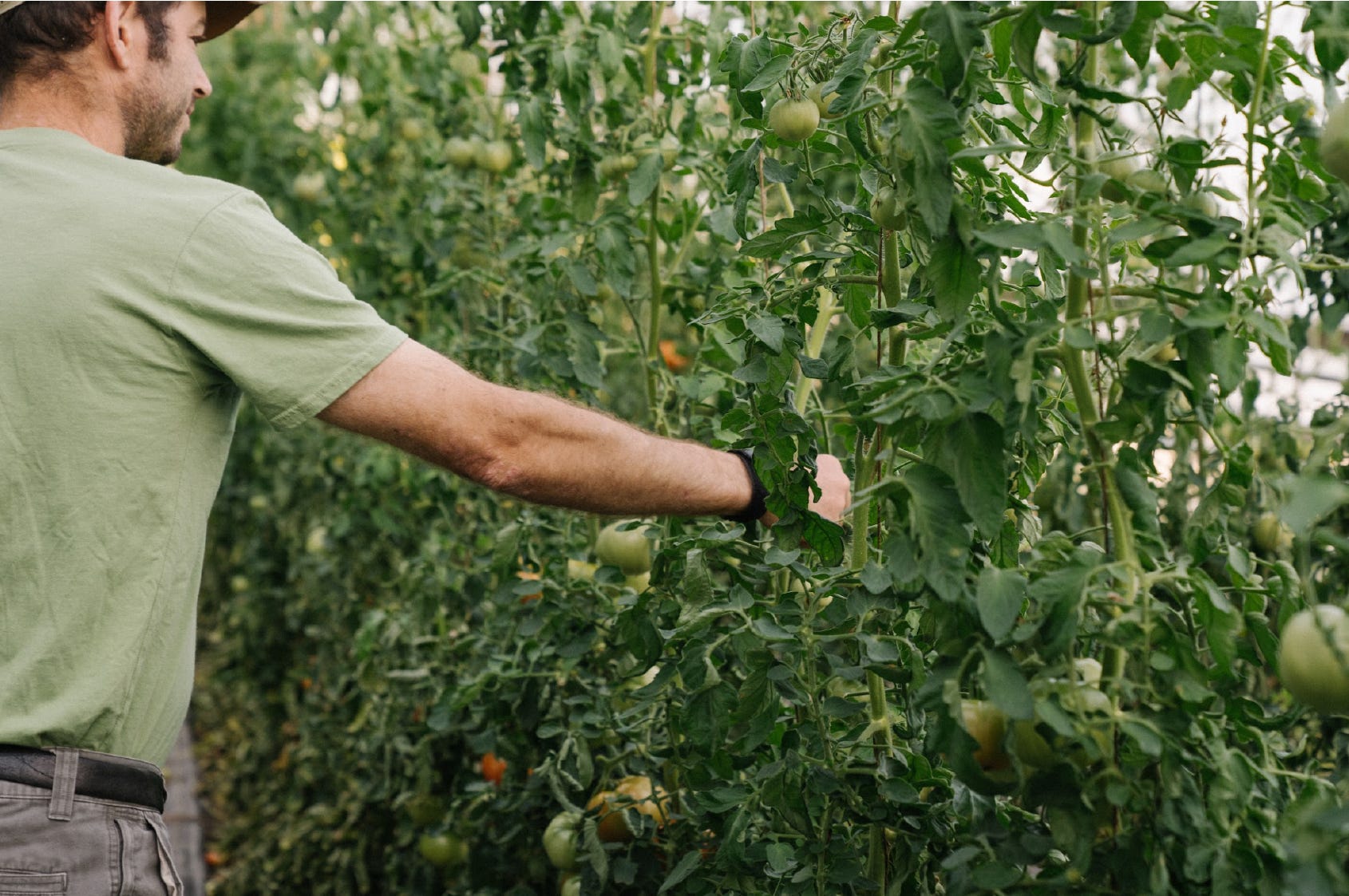
S.D.: Our spring CSA will start March 23. Most of the crops for that were planted back in the fall and are now surviving in the hoop houses. The main things that do well in that weather are hearty greens, so things like spinach, claytonia, kale, lettuce and arugula. Mostly greens, but also some things like radishes, scallions and broccoli rabe will come a little later in the spring CSA.
Q. Do you have a crop you can’t wait to harvest and enjoy?
S.D.: Honestly, just like any first greens that we get. I mean, I love claytonia, I love spinach, but it’s just that early, overwintered green that is just the best flavor.
Q. What keeps you connected to the farm and passionate about the work you do there?
S.D.: Even though I’m no longer involved in the production, I still very much feel passionate about local food and taking care of a piece of property here. We take that pretty seriously and strongly. We really believe that community can come from gathering around good food and taking care of our small part of the earth.
Q. Can you introduce NOFA-VT’s farm share program?
J.D.: Through the program, the customer who applies and is accepted would pay a portion of the cost, and then NOFA-VT would contribute a portion of the cost. The idea is that the customer pays half the share, NOFA pays a quarter, and the farm pays a quarter. Our farm either covers the cost or fundraises for the difference.
Our goal has been to make our food accessible to people with different levels of financial security, but it’s very challenging to make a living, and we don’t have much room to sell food cheaply. We have to charge the premium prices that organic food is worth. This program felt like an opportunity to provide food for folks with lower incomes, while having some financial support to make that possible.
Q. When do the applications open for the NOFA-VT farm share program?
J.D.: They opened at the beginning of February, and remain open through the 28th of February.
Q. What has been the most rewarding part of life on Trillium Hill Farm?
S.D.: After a 12-hour day of working outside and being pretty hot and stressed, and then you come across a customer who is just really enthusiastic about what we’re doing, or tried a new vegetable, or just has gratitude for us taking care of this property. That just makes it all worthwhile. Getting community involved in what we’re doing here, whether it’s by eating a vegetable or taking a walk on the farm, that’s what makes me happy.