

Word of the Week: Palladium
George Washington, FDR, the 22nd Amendment, the Greek goddess Athena, an asteroid, and how this word ties them all together.
By Cathy Ryan
The Record staff reporter
I recently read that the law that limits the President of the United States to two terms has only been in effect since 1951. I was surprised – I thought that law had been around much earlier. So I started Googling, and searching, and learning, and I invite you to follow me down the rabbit hole…
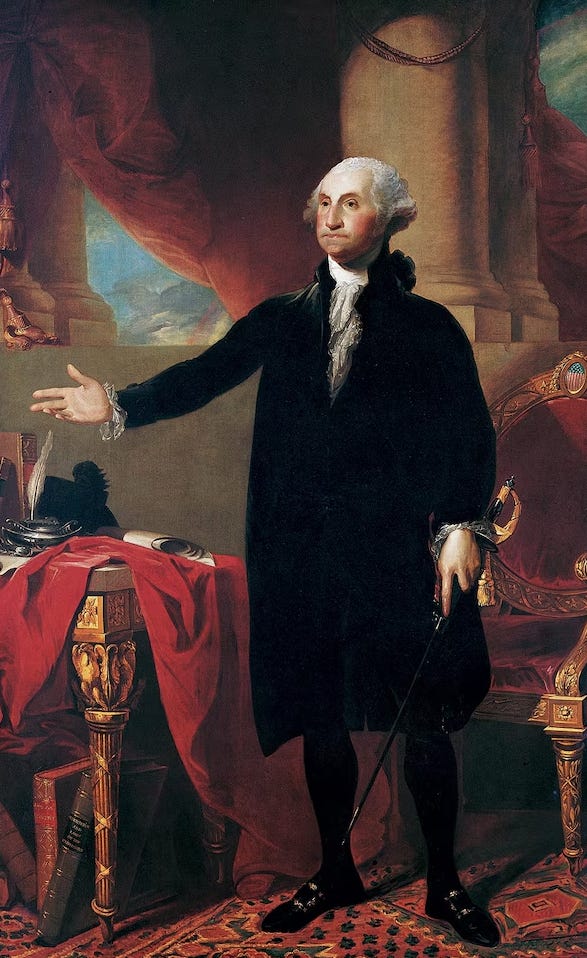
Let’s start at the beginning (of the United States of America). George Washington was, of course, our first president. He was elected to a second term, and was encouraged to run for a third. He declined. One of his concerns was his advanced age. He worried that if he died in office, people might perceive the presidency as a lifetime appointment.
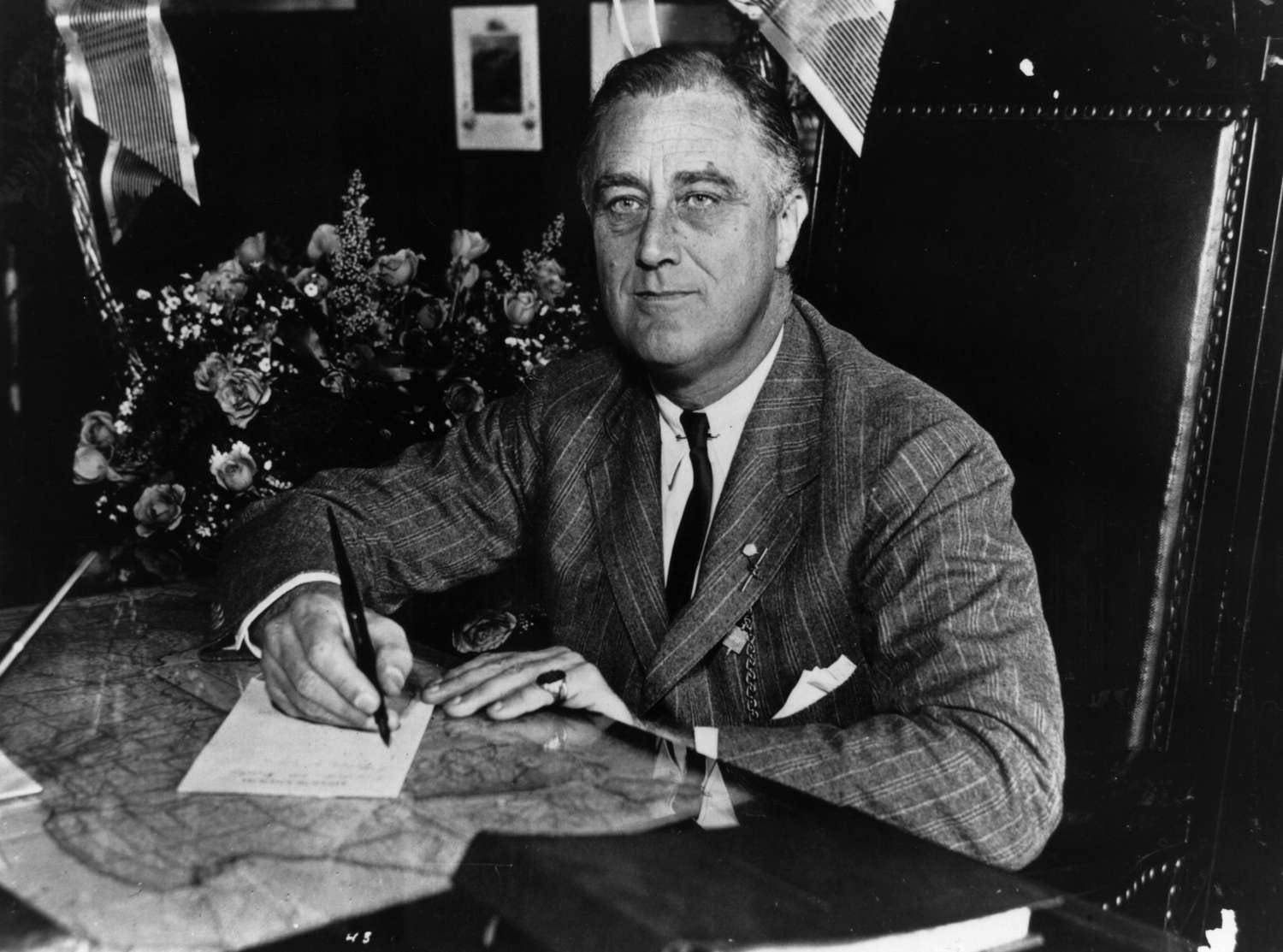
For almost 150 years, Washington’s precedent of only serving two terms resulted in few presidents running for a third term, and no presidents being elected for a third term… until Franklin D. Roosevelt. FDR was elected four times: in 1932, 1936, 1940, and 1944. He passed away from a cerebral hemorrhage just 83 days into his fourth term, on April 12, 1945. In March 1947 a Republican-controlled Congress approved the 22nd Amendment, limiting a president to two terms, and it was ratified in February 1951. You can read more about the entire situation here.
Washington wrote a Farewell Address in 1796, which was a letter addressed to the public. He explained why he was retiring, and not running for a third term, and discussed a variety of other topics.
Washington did not publicly deliver his Farewell Address. It first appeared on Sept. 19, 1796, in the Philadelphia Daily American Advertiser and then in papers around the country. You can read a discussion of the Farewell Address, and watch a video of Senator Tim Kaine describing it, here.
This paragraph about unity caught my attention:
The unity of government which constitutes you one people is also now dear to you. …You should properly estimate the immense value of your national union to your collective and individual happiness; …accustoming yourselves to think and speak of it as of the palladium of your political safety and prosperity; watching for its preservation with jealous anxiety; …and indignantly frowning upon the first dawning of every attempt to alienate any portion of our country from the rest.
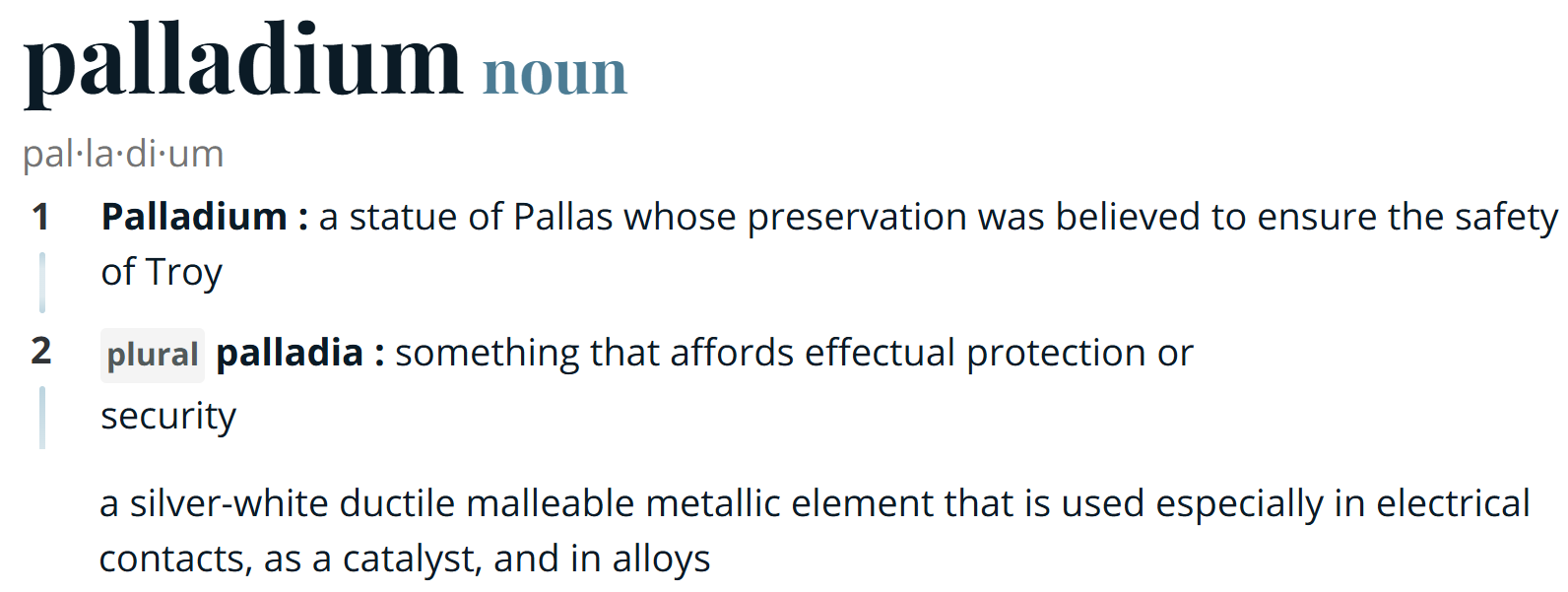
Even before I looked up the definition, I liked the word palladium. It sounds interesting and majestic. As the graphic above explains, it has several definitions. One definition of Palladium refers to an ancient statue of the Greek goddess Pallas Athena which is said to have protected the city of Troy during the Trojan War (circa 1200 B.C.).
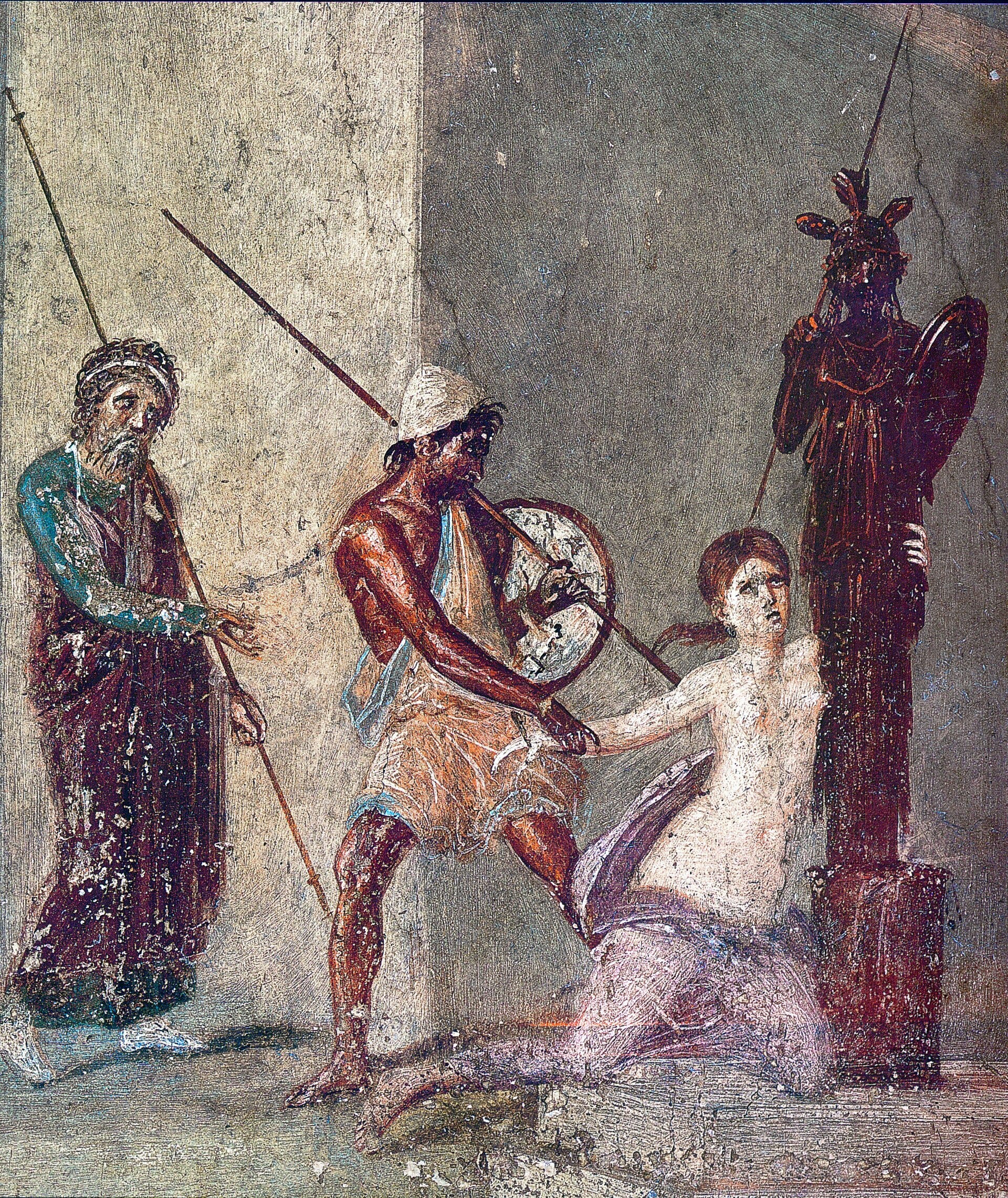
As the story goes, Odysseus and Diomedes stole the Palladium during the final year of the Trojan War, shortly before the fall of Troy. This secret nighttime raid happened after the Greeks captured the Trojan prophet Helenus, who revealed that Troy could not be beaten while the sacred statue remained inside the city walls.
The current hit movie The Odyssey (and the epic poem it was based on) takes place after the Trojan War, focusing on Odysseus’s perilous voyage home and the chaos taking place in Ithaca in his absence. But in the movie, there are flashbacks to the war itself. There are scenes featuring a toppled and broken statue of Athena, but this is not the Palladium, because the Palladium was smaller and wooden, and was also stolen out of the city by Odysseus.
Thus, palladium, and the plural palladia, have come to mean something that gives protection. George Washington, writing, “think and speak of it [our unity as a country] as of the palladium of your political safety and prosperity” was saying that our unity protects us, and that we should fight hard against being divided.
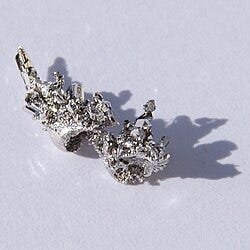
Palladium is also a chemical element. It is a rare silvery-white metal. The asteroid belt between Mars and Jupiter was first discovered in 1801 when Italian astronomer Giuseppe Piazzi found its first and largest object, which was later named Ceres. As more objects were discovered in the coming years, most of them were named after figures in Greek mythology. One was named Pallas in 1803. In the same year, scientists isolated a new silvery metal element, which they named palladium in honor of the recently discovered asteroid.
Palladium (the metal) is primarily used in automotive catalytic converters, electronics, jewelry, and dentistry. It can also be found on some extremely expensive handbags.
You can read previous Word of the Week articles here.