

Word of the Week: Ponderous
Might not mean what you think. Plus, a discussion of author Philip K. Dick, whom you may not have heard of, but you've heard of movie adaptations of his books.
By Cathy Ryan
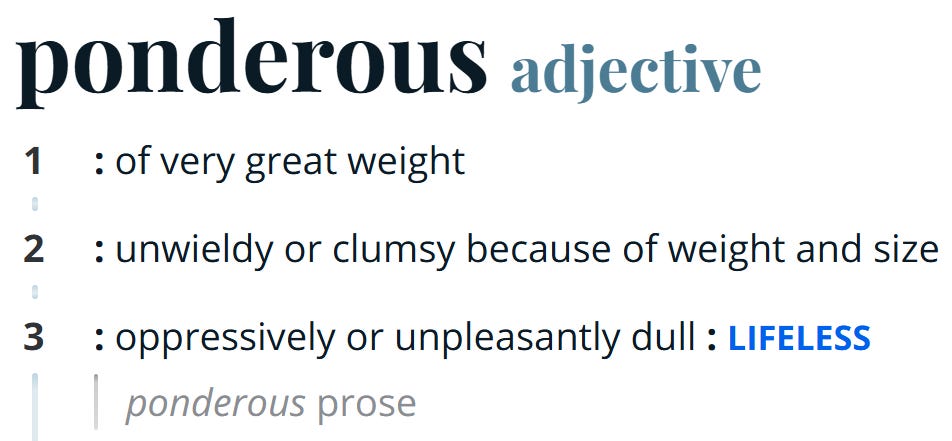
This week’s Word of the Week is ponderous. Often, I’ll read a word and think I have an idea of the meaning, but look it up just to be sure, and find that I was wrong. This is one of those cases. Thinking of the word ponder, which most of us know, I was thinking ponderous described someone who ponders, or contemplates things. Someone might ponder weighty decisions, but ponderous is more literal – it means something heavy. It can also mean something dull and boring. Both ponder and ponderous come from the Latin word for “weight,” pondus.
I read this word in a short story by Philip K. Dick called “Beyond Lies the Wub.” Some of Dick’s short stories, including this one, are in the public domain, and you can read the story online here. A collection of all his public domain stories is available here.
“We are a very old race,” the wub said. “Very old and very ponderous. It is difficult for us to move around. You can appreciate that anything so slow and heavy would be at the mercy of more agile forms of life.
You may or may not have heard of Philip K. Dick, but you have certainly heard of some movies that have been adapted from his novels and stories, including:
Blade Runner (1982), based on Dick’s 1968 novel Do Androids Dream of Electric Sheep?
Total Recall (1990), based on the short story “We Can Remember It for You Wholesale.”
Minority Report (2002), based on the short story of the same name.
The series The Man in the High Castle, based on the novel of the same name.

Philip K. Dick was born in Chicago in 1928. He began publishing novels and stories in the 1950s. He did not earn much acclaim until he published his alternative history novel The Man in the High Castle in 1962, which earned a Hugo Award. But even then, he was primarily only known by dedicated science fiction fans.
Dick had a tumultuous life. He married five times, suffered from anxiety, was a heavy drug user, attempted suicide, and suffered from hallucinations (or, had paranormal experiences, depending on whether you believe what he claimed to see). He had financial difficulties for much of his life, and in the introduction to the 1980 short story collection The Golden Man, he wrote:
Several years ago, when I was ill, Heinlein [author Robert A. Heinlein] offered his help, anything he could do, and we had never met; he would phone me to cheer me up and see how I was doing. He wanted to buy me an electric typewriter, God bless him – one of the few true gentlemen in this world. I don’t agree with any ideas he puts forth in his writing, but that is neither here nor there. One time when I owed the IRS a lot of money and couldn’t raise it, Heinlein loaned the money to me. I think a great deal of him and his wife; I dedicated a book to them in appreciation. Robert Heinlein is a fine-looking man, very impressive and very military in stance; you can tell he has a military background, even to the haircut. He knows I’m a flipped-out freak and still he helped me and my wife when we were in trouble. That is the best in humanity, there; that is who and what I love.
Dick died in 1982, at the age of 53, as a result of a stroke. After his death, his work became much more well-known, primarily because of the movies and series made from his work. In 2005, Time magazine named Ubik (1969) one of the hundred greatest English-language novels published since 1923. He was also inducted into the Science Fiction Hall of Fame in 2005.
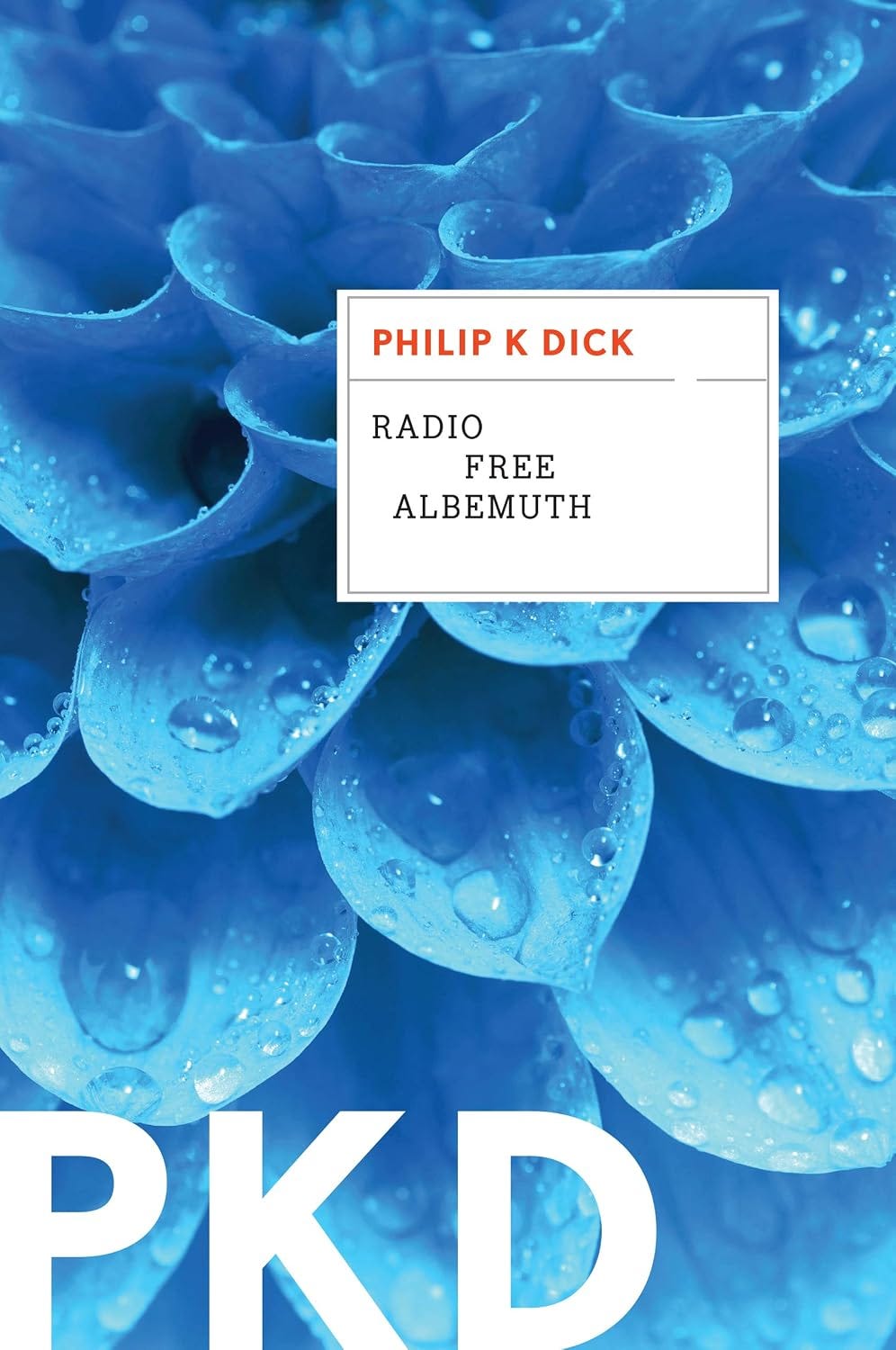
Philip K. Dick now has legions of fans, and this article in The Guardian, in which three writers describe their favorite book by him, confirms that his diehard fans call themselves Dickheads. He is also known by his initials, PKD, and many of his books now have a cover emblazoned with “PKD.” I’ve enjoyed many of his stories, and recommend him, especially to science fiction fans.
You can read previous Word of the Week articles here.