Word of the Week – Tittle (nope, not Title)
A mistyping leads to several new (to me) words
By Cathy Ryan
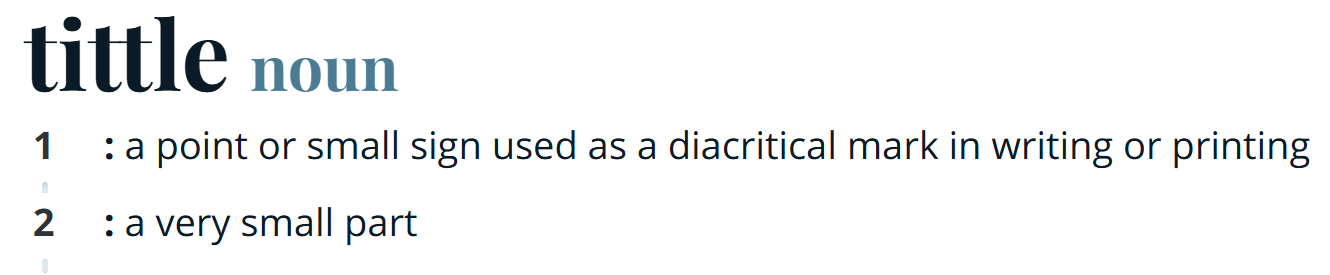
While playing an online word game recently, I accidentally entered “tittle.” To my surprise, it was accepted! So of course, I then had to go look it up. One definition I found said:
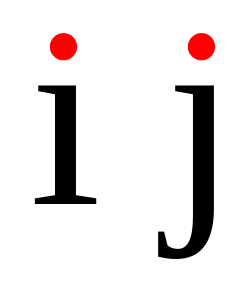
A tittle is a small distinguishing mark or sign in writing or printing. Most commonly, it refers to the dot placed over the lowercase letters i and j. It functions as a diacritic.
Don’t you hate it when a definition uses another word you don’t know? Now I have to look up diacritic.
A diacritic is a mark near or through an orthographic or phonetic character or combination of characters indicating a phonetic value different from that given the unmarked or otherwise marked element.
Dang it, now I have to look up orthographic:
of, relating to, being, or prepared by orthographic projection.
a. of or relating to orthography.
b. correct in spelling
Well, that was less than helpful…
a. the art of writing words with the proper letters according to standard usage
b. the representation of the sounds of a language by written or printed symbolsa part of language study that deals with letters and spelling
OK, so let’s get back to tittles and diacritics. A tittle can mean a tiny thing, but most often it refers to the dot above the letters i and j. A tittle is a type of diacritic, which means a mark above, near, or through a letter or letters – often to help people know how to pronounce it.
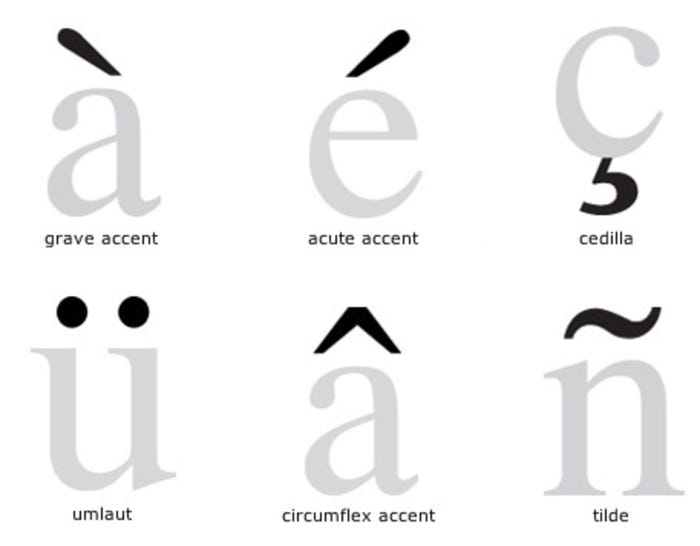
English doesn’t use many diacritics. I think that’s because whoever invented English thought it would be a hoot if everyone was constantly confused about how to spell and pronounce words. Why does lose rhyme with choose and not chose? Why doesn’t come rhyme with home? It makes no sense – it’s anarchy! The few times diacritics are used in English, such as with café, it’s because the word was borrowed from another language.
Other languages are much more consistent. In Italian, “ce” is always pronounced “ch” such as in cello. So if you see it in another word, like cena or dolce, you know how to pronounce it. People whose first language is not English are often confused about the concept of a spelling bee. Isn’t it obvious how spell and pronounce words? Not in English! Here’s a New York Times article that discusses this (and it has the word orthographic in the second sentence!).
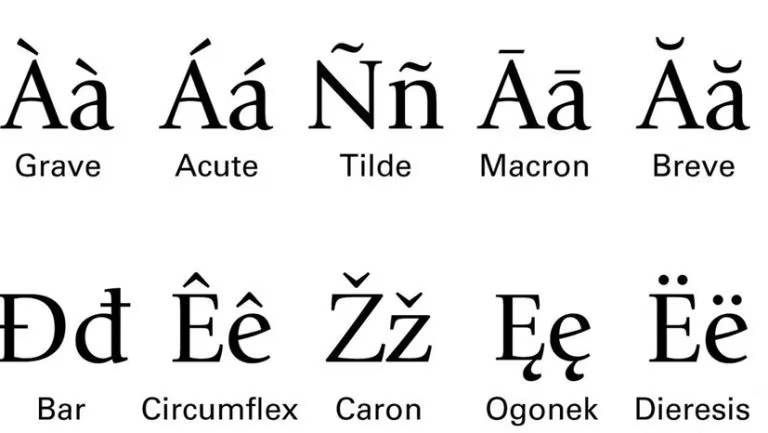
Many languages then use diacritics to indicate if letters should be pronounced differently than normal, which is very helpful. For instance the Spanish word niños has both a regular n and an n with a tilde. They are pronounced differently; the one with the tilde is pronounced a bit like “ny”. I think to myself “Nyuk, nyuk, nyuk!” to get it right.
If you haven’t had your fill of new words, here are the names of some interesting diacritics. None of these words are creative insults (my favorite type of new word to learn), but if you call someone an umlaut or accuse them of being circumflex, you might at least confuse them.