

CVU Turf Field: Coaches Perspective
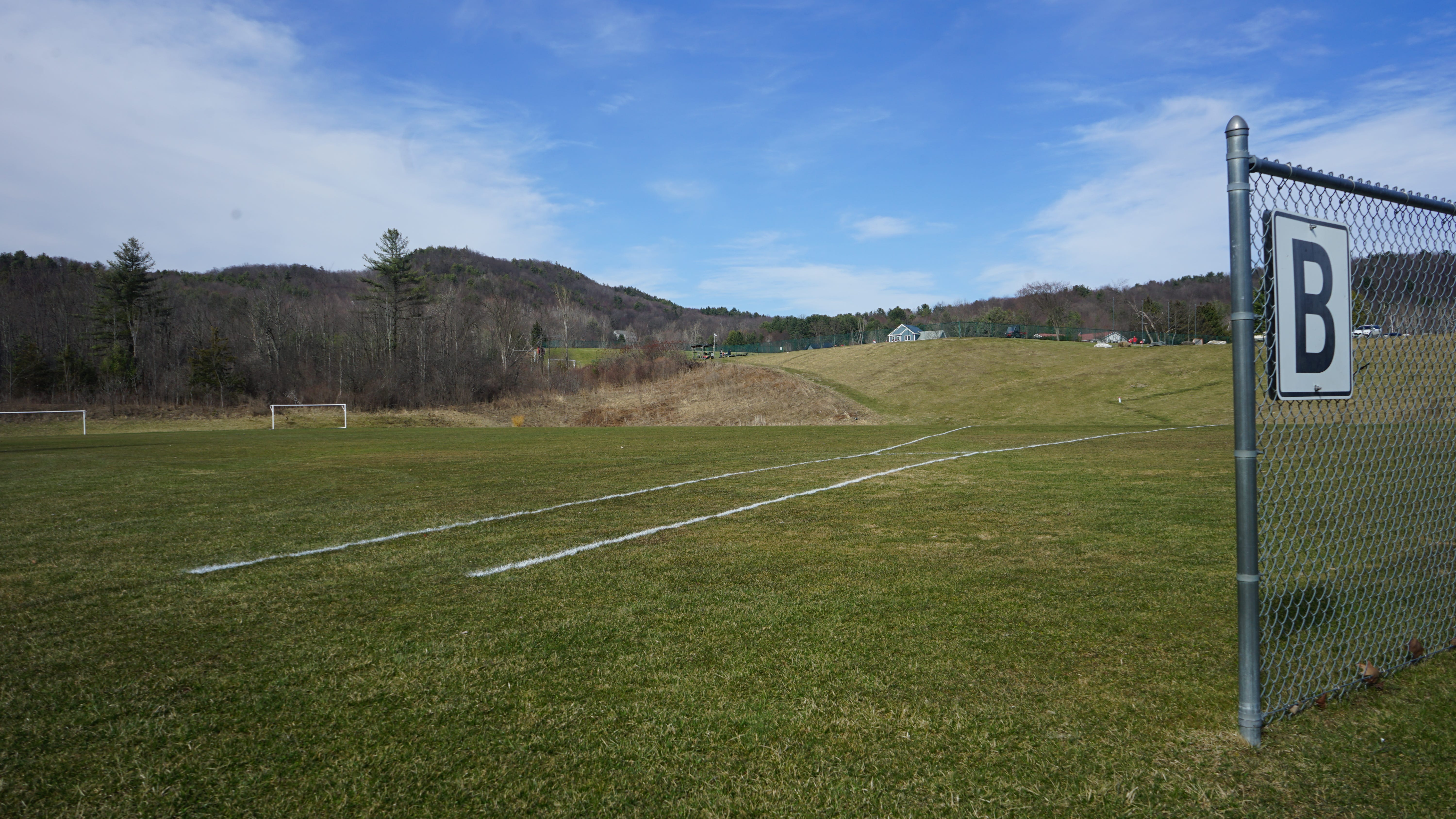
Student athletes face disruptions and practices in school parking lot when grass field is unplayable, but critics worry about environmental risk of turf
By Anna Gilmore
Hinesburg Record Intern
The Champlain Valley School District (CVSD) board has vowed to hold off on any authorization to proceed with a proposed artificial turf athletic field until a long list of additional information is gathered, but debate about the project has not paused and continues to be divided.
The privately funded $5.5 million field would replace the grass Field B at Champlain Valley Union High School in Hinesburg. Supporters say it’s an overdue upgrade to the often soggy and unplayable grass field; critics worry about environmental impact. The board at its regular April 14 meeting requested an independent hydrogeologic study, environmental comparison between turf and natural grass and other new information.
Charlotte resident Eli Lesser-Goldsmith is the leader of the Community Field Project, which is proposing the turf field. He told The Hinesburg Record last week that he’s not daunted by the request for additional information.
“We are a group who only sees opportunity. We are following the process; we are excited by the process; we’re thrilled that the school board has now taken up the issue and discussed it at that meeting [April 14] and we’ll be discussing it in the future as well,” Lesser-Goldsmith said.
Meanwhile, the topic remains contested.
For all The Record’s coverage of the artificial turf field proposal – including the Hinesburg selectboard’s concerns expressed in a meeting last week – click here.
The often swampy condition of CVU’s fields is not only a hazard in itself, but it’s also forced four teams to practice consistently in the school parking lot, which further puts players’ safety at risk, supporters say. Scheduled home games frequently have to be moved, creating more problems.
So far, CVSD has not been able to come up with figures for how many games and practices are missed in an average year, nor the cost of maintenance and busing students to other locations to practice or play games, nor the extent of injuries caused by less-than-ideal conditions.
“When the weather does cause a game change of site, we also risk students’ safety by putting them on a bus or individual vehicles to drive somewhere else,” said Somer MacKillop, a certified athletic trainer and former student athlete at CVU. “If environmental concerns are a factor, this is even more travel energy going into the air.”
Critics worry about the potential for PFAS – forever chemicals created or used in creating plastics – to run off to local water supplies from the turf. Easton, Massachusetts, is one town that has experienced contamination of its water from artificial turf fields.
“I think it’s really important to have a good field, I think it’s important to have good outside space, but I think weighing the potential for permanent contamination on Hinesburg’s town well is not trivial,” said Meg Handler, a parent of two former CVU varsity athletes.
She also expressed concern about the “coercive nature of a private contribution to a public school.. I’m concerned about the values this conveys to the school. It’s a public school and it needs to be serving the interests of the whole community,” Handler added.
The project was first proposed last fall; a public presentation of the proposal by Lesseer-Goldsmith’s team and FieldTurf, the manufacturer, finally happened in early April. It would include new bleachers, lighting, a larger parking lot, bathroom and a concession stand.
From MacKillop’s perspective, the proposal would be a big improvement to the current dysfunctional state of the fields.
“Fields are essentially unusable from mid-October to May, and sometimes that’s generous,” he said. “The only months the fields are perfect are June, July, August, and September, which 50 percent of the time we are not in school. There’s a reason that over the last twelve years, there have been three attempts at building a turf field, and that’s because it’s necessary.”
Many questions have been raised over the impact the turf could have on Hinesburg’s drinking water, on student health and safety, and on long-term maintenance costs. Multiple public meetings have already taken place to educate about both respective sides of the proposal. At the Champlain Valley School District board meeting on April 14, parents, local residents, students, and coaches offered a range of opinions.
“The big picture is that we’ve had numerous games postponed, practices moved, and senior games and playoff games hosted by other schools when we’re the home team,” said Tucker Pierson, the girls varsity lacrosse and field hockey head coach and a CVU parent. “While this might seem like merely an inconvenience to some folks, I want to convey the … weekly stressors that the unknowns and changes which are often last minute add to the many families, coaches, and administrators as we’re all hustling to find where we can be at the last minute.”
She emphasized another downside to maintaining a grass field – the strenuous seasonal lining process the facilities crew goes through annually. This is a days-long process, which means the space is made off-limits until all the lines are painted and dried. She stressed how if there was turf, then the lines would be permanent and therefore this would no longer be a concern.
When the fields are not in a playable condition, it often means athletes are sidelined.
“On rainy days where most folks in the area who have access to facilities that would allow them to practice, we sit in a classroom and watch film,” said Owen McCuin, former CVU athlete and current boys varsity lacrosse assistant coach.
“Although this is still incredibly valuable, it’s extremely important for us to bond while also playing the sport that they all love together,” he added. “All of our players were sitting in classrooms throughout the whole day, and they really look forward to going out and playing. That affects the mental wellbeing of a player and I’d love for them to get more time to do the thing that a lot of them love to do most.”
The board also heard from those who hadn’t been convinced.
“We voted this down twice and following democracy is good for our mental health just like real grass is good for our mental health,” commented Jennifer Decker, a Hinesburg resident.
After discussion regarding public comments, the board said they would weigh student benefits, community concerns, and individual responsibilities as a board member when making their decision. They then called for a list of studies to be conducted before any further steps can be taken, including:
Independent hydrogeological study to assess possible water contamination
Environmental comparison between artificial turf and natural grass
Analysis of turf material options
Product data and guarantees, including potential solutions in case of failure or contamination
Cost analysis
Lighting impact review
Legal and procedural review
Superintendent Adam Bunting and the district’s chief operating officer, Gary Marckres, were assigned the task of answering some of these questions in time for the board’s next meeting at 6 p.m. Tuesday, May 19.
Via Community News Service, a University of Vermont internship, for the Hinesburg Record
I have visited the CVU sports fields during mud season after a rainy weekend. They seemed great to me. Maybe the coaches should let the athlete get a little muddy rather than practice in parking lots. Those muddy soccer games of my childhood were the most fun anyway.