

New Housing Helps Affordability
Increasing supply eases pressures on pricing, adds to tax base
By Matt Francis
Hinesburg Affordable Housing Committee
Hinesburg residents and Vermonters alike feel the sting of the “affordability crisis.” Why is it so expensive to live here and what do we do about it? The key is to understand the demographic data, according to Kevin Chu, the Executive Director of the nonprofit nonpartisan Vermont Futures Project.
“It’s no surprise that Vermont is one of the oldest states by median age,” says Chu. “How that translates into economic impacts and affordability is that we have a shrinking workforce and a shrinking tax base.”
According to data collected by the Vermont Futures Project, in 1970 – when Act 250 was passed – the median household size in Vermont was 3.21 people per household. Now, it is 2.18. Over that same 50-year span, housing construction has decelerated dramatically. Between 1970 and 1989, 1,200 homes were built in Hinesburg. From 1990 to present day, less than 600 have been built.
“Let’s say you had a family of four, who bought a home in Vermont fifty years ago or so,” continues Chu, “and then as the kids grew up, and not enough new homes were built, they were faced with some tough options. They could either try to stay in their community and compete in a scarce housing market, they could stay at home with mom and dad or they left their community.”
The exodus of the working age population, combined with a lack of new housing supply has led to skyrocketing costs and unaffordability.
“Some folks want to age in place and that’s great,” says Chu. “I think choice within the housing market is a great thing, but a choice that is missing for a lot of folks who may want to downsize is a newer, more age-friendly type of housing. If the older Vermonters who may want to downsize can’t, and they’re stuck in place, it means they’re occupying a home that would be the perfect fit for a growing family. So, we’re not even efficiently using the housing stock we already have. And that’s why new housing is so important.”
A primary solution for the Vermont Futures Project is to return our rural towns and cities to their historical peaks, which would reduce the tax burden on all Vermonters. If the median household size were the same as it was in 1970, the Vermont population would be over 900,000 compared to the present 650,000. While no one is in favor of overpopulation, there is clearly some room to grow within existing infrastructure.
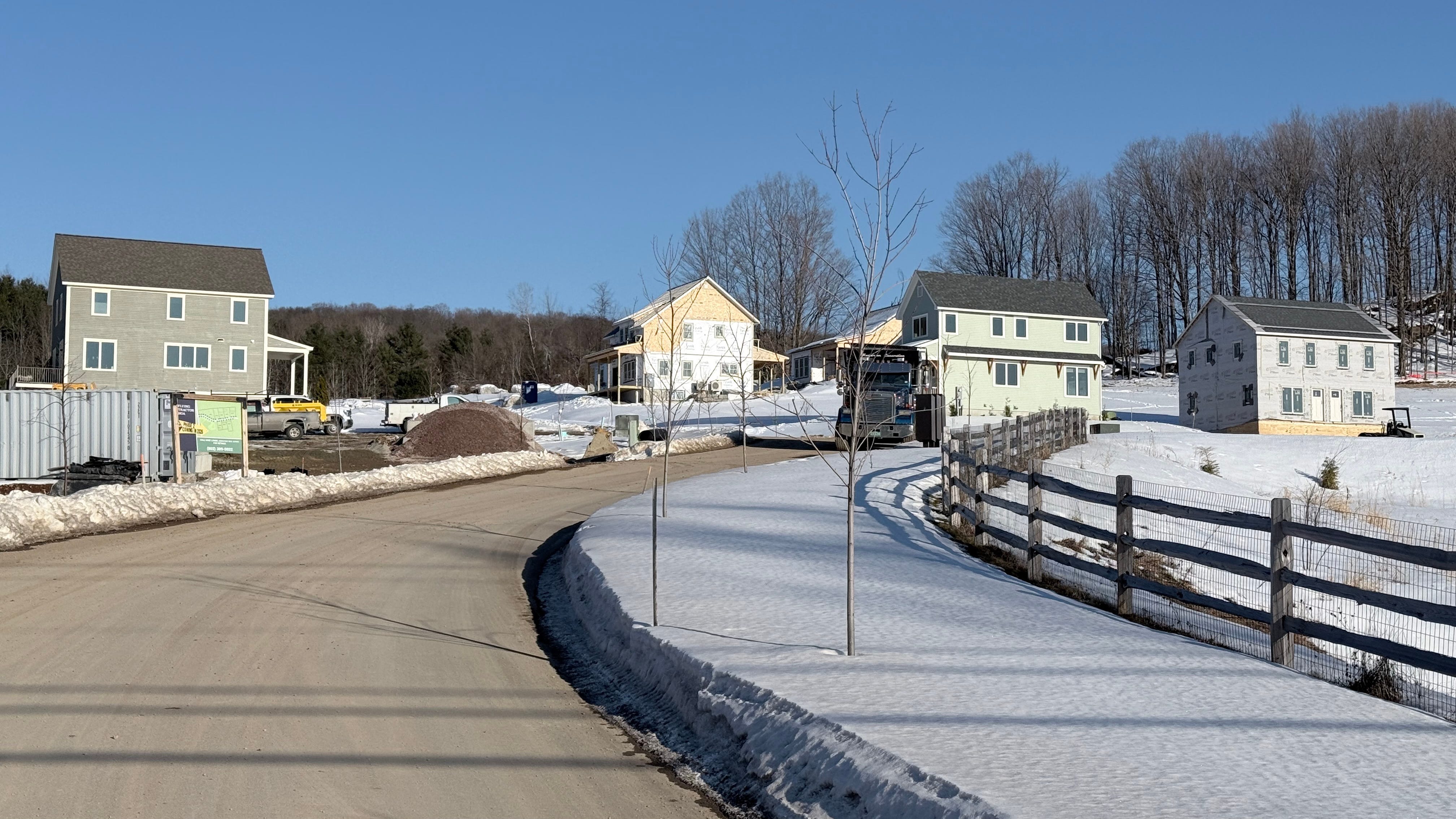
Chittenden County and Hinesburg are of course a little different, with population growth steadily climbing. However, the demand for jobs still outpaces the supply of housing. In some ways, Hinesburg is ahead of the curve. With over 450 units approved, we are on track to hit the development goals outlined by the Chittenden County Regional Planning Commission.
The Vermont Futures Project offers many policy ideas for incentivizing and attaining a workforce. When it comes to housing policy, some of the solutions include infill development, tax increment financing, permitting reform, incentives for construction materials, and support for the new Act 250 map reforms.
More housing comes with environmental benefits as well. Vermonters will be able to shorten commutes, cutting down on greenhouse gases. Chu recently modeled a 25 percent reduction in greenhouse gases by building more housing in Middlebury, where many workers commute from New York State to work at Porter hospital.
“One of the things I get frustrated by is seeing the environmental and economic perspectives pitted against each other as if they are always at odds. And again, we can use a data-informed approach to show they don’t have to be at odds. If it’s cast as a zero-sum game, then we’re going to be stuck in the same dynamics that we have been over the past 50 or so years,” says Chu.
Mobility in the housing market opens up opportunities across communities in the region.
“The focus that I see in a lot of public conversations on housing is who is going to be the direct beneficiary of a new housing unit and not what is the overall impact for the community,” says Chu. By prioritizing multifamily units, senior housing, smaller dwellings, as well as denser walkable development, we can hopefully transform existing housing stock to be more affordable. If Hinesburg continues to meet development goals, and if other towns follow a similar model to build more housing, it can have a positive impact on affordability and on our community as a whole.
For more information on the Vermont Futures Project, including a well-researched Economic Action Plan, head to their website vtfuturesproject.org.
If you have an interest in helping Hinesburg bring housing to our community, especially affordable housing, the Hinesburg Affordable Housing Committee has one opening on the committee. Please email Carl Bohlen or contact the Town manager’s office.