

By Cathy Ryan
The Record staff reporter
I recently read Lock In by John Scalzi. In this novel, a virus has caused some people to become “locked in” – they are conscious and aware, but unable to move their bodies; they look to be asleep, but they are conscious. These people are called “Hadens” after the First Lady, who also contracted the disease. Technology has been developed to allow their consciousness to be transferred into robots, so they can move around and participate in the world. I enjoyed the book, and recommend it. In addition to the science fiction aspect, it is a crime drama.
In the book, there is a virtual world called the Agora where Hadens can socialize. I didn’t know whether it was a made-up word, or meant something, so I Googled it. As I started typing it, Google suggested the word agoraphobia, and I thought, “Oh, right! What does that mean again?”
Agoraphobia most often refers to a fear of public places and crowds, but it also can more generally refer to an abnormal fear of being helpless in a situation from which escape may be difficult or embarrassing.
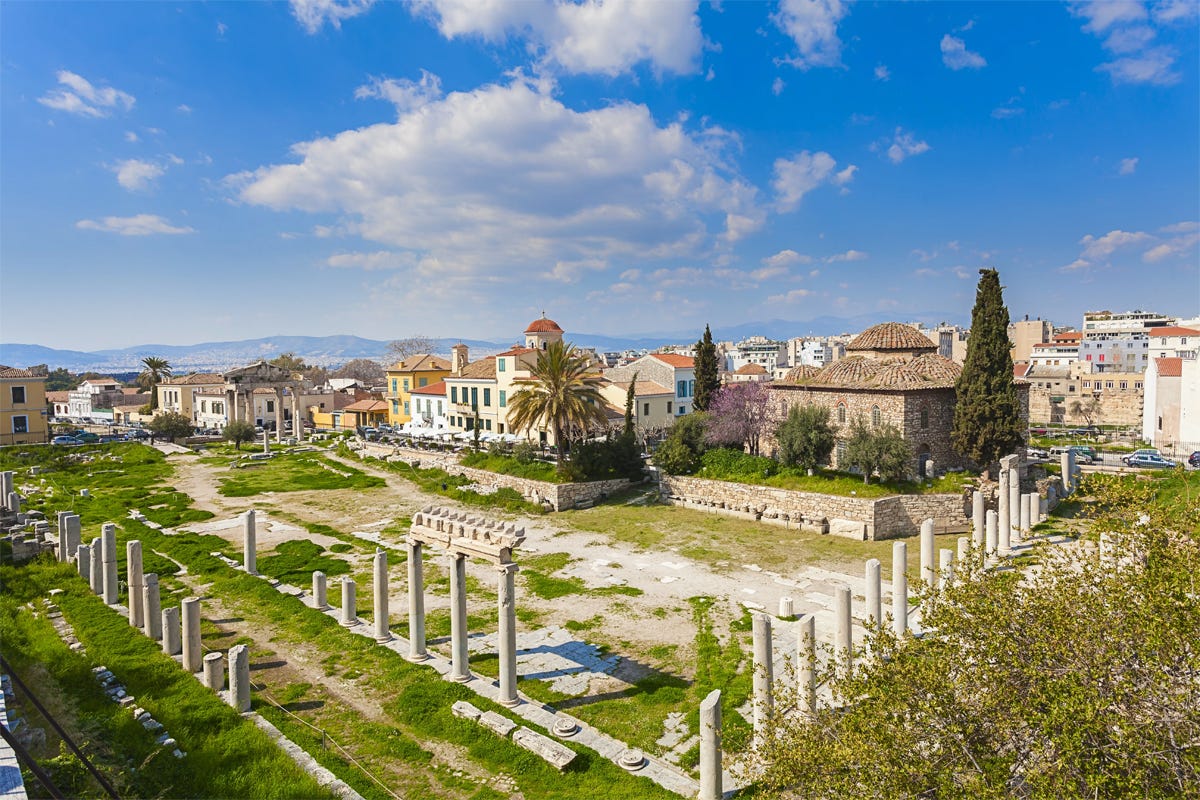
If agoraphobia means a fear of public places or crowds, does agora mean a public place? Yes! The agora was a public meeting place and marketplace in ancient Greece. It refers to both the assembly of the people as well as the physical setting.
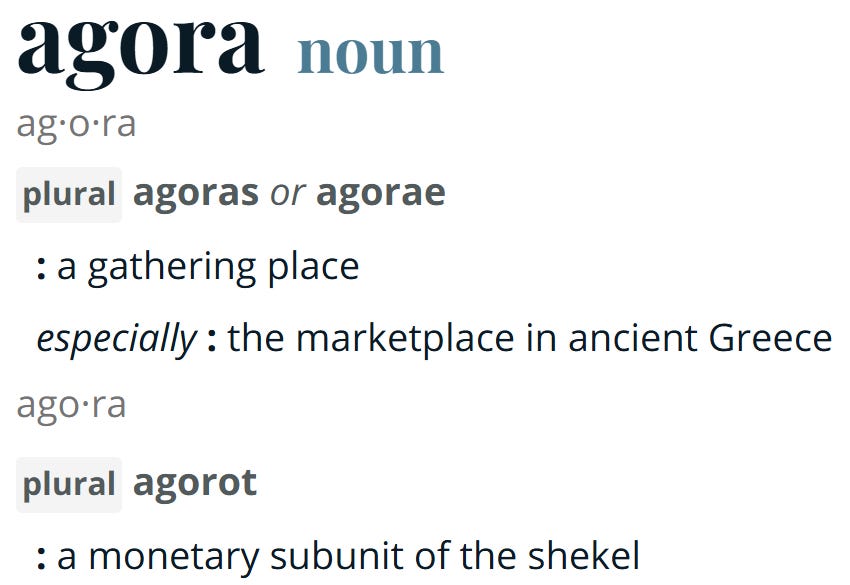
Merriam-Webster gives the following description:
In ancient Greek cities, an agora was an open space serving as an assembly area and a place for commercial, civic, social, and religious activities. Located in the middle of the city or near the harbor, it was often enclosed by public buildings, covered areas containing shops, and stoas for protection from sun and bad weather. The highest honor for a citizen was to be granted a tomb in the agora.
Well, now I have to look up stoas.

The website greece-is.com gives the following description:
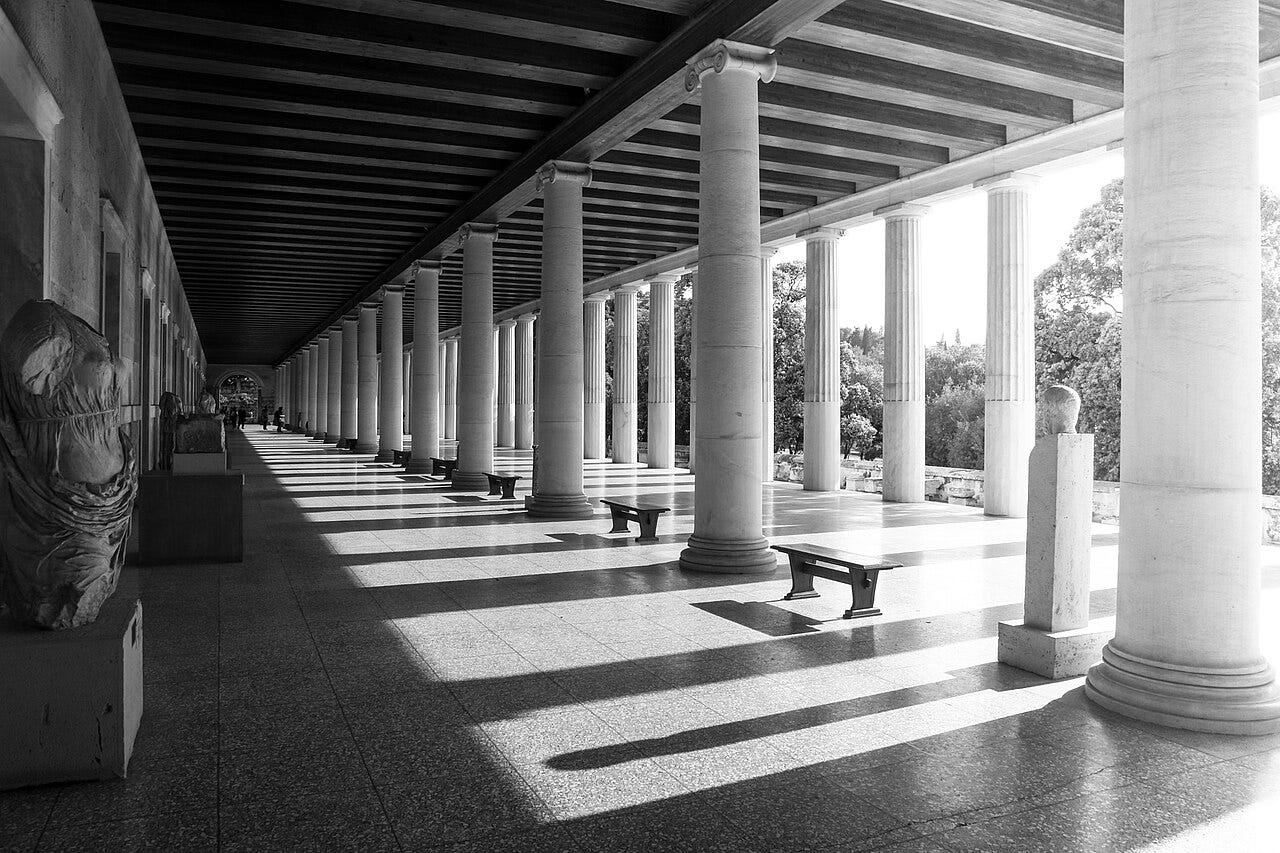
A stoa was any long colonnaded building, well adapted to the Greek climate and the needs of the people. The open colonnaded side provided good light and fresh air, while the roof and side walls provided protection from the sun in summer and wind and rain in winter. Stoas were often very large, capable of accommodating thousands of individuals, and they are found wherever many people were expected to gather.
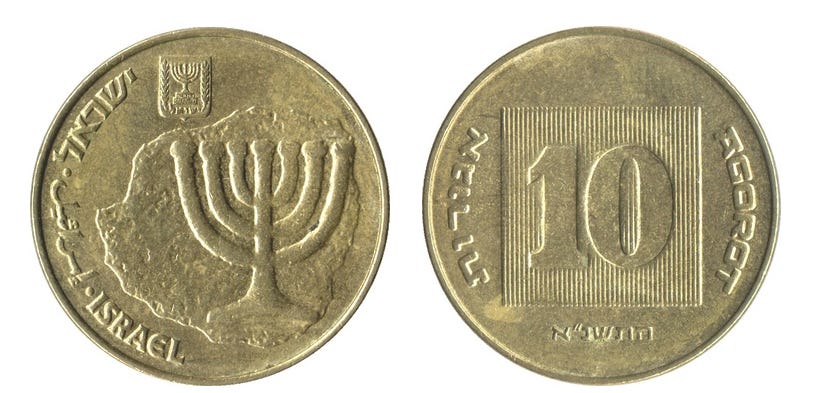
There is another interesting definition of agora – the Israeli new shekel is divided into 100 agorot (the plural of agora in this definition), just as the American dollar is divided into 100 cents. The 1 agora coin was withdrawn from circulation in 1991, as was the 5 agorot coin in 2008.
I think it’s interesting that the plural form of agora is different depending upon which definition you’re using. Another word that is similar is die. The plural is dice if you’re referring to the numbered cube, but dies if you’re referring to metal stamps or tools used for shaping or cutting material.
Perhaps we should lobby for the new pavilion at the Hinesburg Town Common to be called The Agora?
You can read previous Word of the Week articles here.